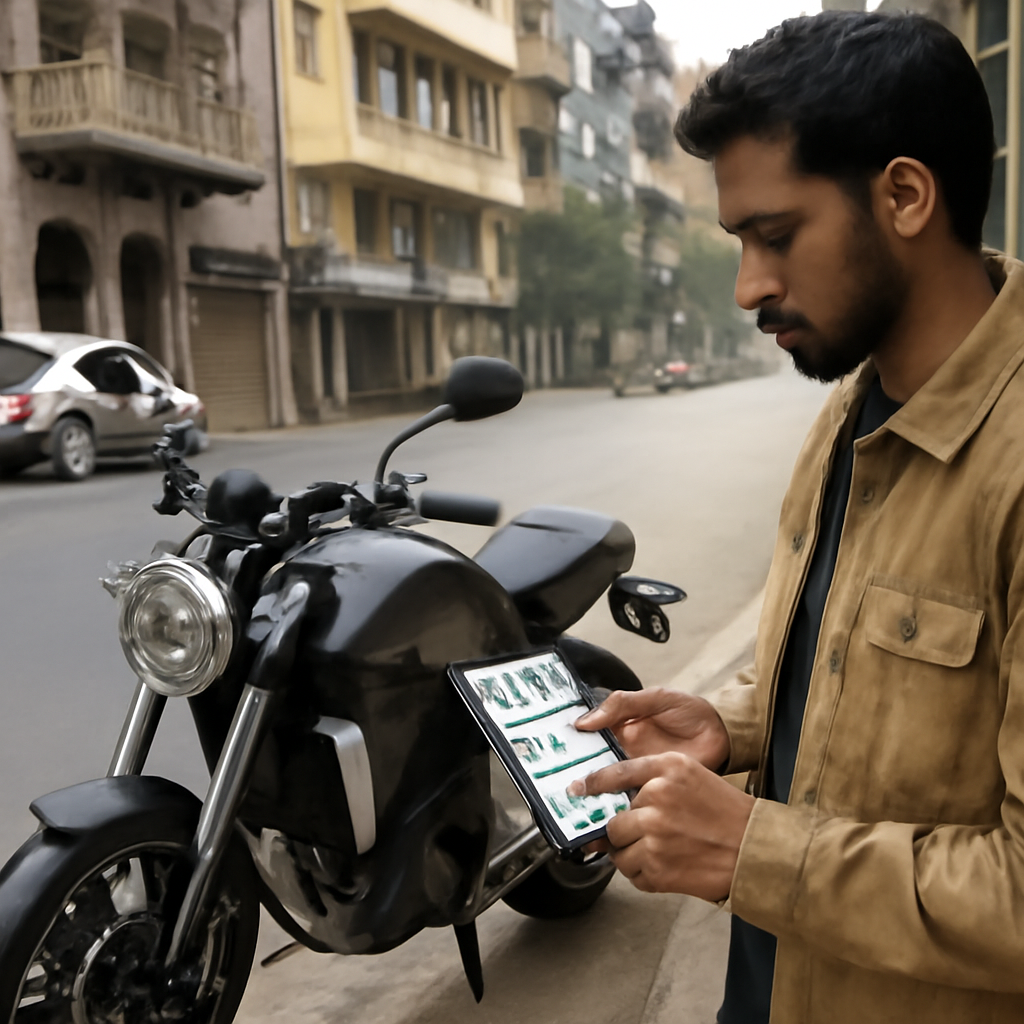
Ultraviolette X-47 Venom: 8 Checks Before You Pay ₹2.65 Lakh
The Ultraviolette X-47 Venom has arrived with a headline-grabbing introductory Bengaluru ex-showroom base price of ₹2.65 lakh for the first 5,000 buyers. That figure is only the starting point, not a final ownership number. Registration, insurance, charger choice, variant selection, home electrical work, financing, and local on-road costs can all change what you actually pay. If you are considering the X-47 Venom as a daily commuter, weekend performance EV, or a long-range premium electric motorcycle, the first job is not to admire the numbers—it is to verify what you are buying, what is included, and what remains optional.
This article uses Ultraviolette’s official product page and spec sheet as the primary factual sources. Range, acceleration, top speed, charging times, and warranty terms below are manufacturer claims or official table entries, not independent road-test results. Treat them as a starting point for evaluation, not a guarantee of real-world performance.
At a glance: the four variants
- X-47: 7.5 kWh battery, the entry point at the introductory price.
- X-47+: 7.5 kWh battery with the 1.6 kW onboard charger.
- X-47 Recon: 11 kWh battery with UV HyperSense 77 GHz rear radar features.
- X-47 Recon+: 11 kWh battery plus the 1.6 kW onboard charger and radar-equipped feature set.
The important distinction is simple: the base price does not automatically buy the longest-range setup. The 7.5 kWh versions and the 11 kWh Recon versions are not interchangeable, and the charging hardware also differs by variant. Before you book, confirm the exact variant name on the order form, not just the marketing headline.
Range and performance: what the official numbers actually say
Ultraviolette lists two battery choices: 7.5 kWh and 11 kWh. The official IDC range claim is 227 km for the 7.5 kWh version and 343 km for the 11 kWh version. The claimed ride-mode estimates are also different by battery size.
- 7.5 kWh battery: Glide 188 km, Combat 150 km, Ballistic 131 km (official claimed estimates).
- 11 kWh battery: Glide 275 km, Combat 220 km, Ballistic 193 km (official claimed estimates).
- Peak output is claimed at 30 kW / 40 hp, with a top speed of 155 km/h and 0–100 km/h in 5.9 seconds (manufacturer claims).
- Kerb weight is listed at 180 kg and seat height at 820 mm.
For buyers, these figures matter most as comparison points between variants, not as promises of what you will see in mixed city traffic, monsoon conditions, hilly routes, or high-speed runs. Until independent road tests are available, do not budget your commute around the best-case IDC number alone. A rider who mostly travels in stop-go traffic may see different results from someone who rides faster on open roads, even with the same bike and the same battery.
The charging setup: portable, onboard, and optional boost
Ultraviolette’s charging story is one of the most important ownership checks. The official spec sheet distinguishes between a portable 1.3 kW charger, a 1.6 kW onboard charger on the X-47+ and Recon+, and an optional 3 kW boost charger. The spec sheet also lists official 20–80% charging time claims for these setups. Those times are manufacturer claims under stated conditions, and they do not mean your home socket, apartment parking, workplace, or nearby public charger will support the same result. Compatibility, installation, wiring capacity, access permissions, and ambient conditions all matter.
- 7.5 kWh battery: portable 1.3 kW charging is claimed at 3h45m from 20–80%.
- 7.5 kWh battery: onboard 1.6 kW charging is claimed at 3h45m from 20–80%.
- 7.5 kWh battery: optional 3 kW boost charging is claimed at 1h50m from 20–80%.
- 11 kWh battery: portable 1.3 kW charging is claimed at 5h30m from 20–80%.
- 11 kWh battery: onboard 1.6 kW charging is claimed at 5h30m from 20–80%.
- 11 kWh battery: optional 3 kW boost charging is claimed at 2h45m from 20–80%.
These are useful planning numbers, but they should not be read as a universal promise. A 3 kW boost charger can only help if the required equipment is compatible with your variant and your installation is approved, and even then the actual session time depends on the state of charge, supply stability, and the conditions at the charging point. If you live in an apartment or park in a shared basement, ask the dealer exactly what hardware must be installed, who is responsible for the electrical work, and whether the society will allow the setup.
Radar and rider aids: useful, but not a substitute for riding judgment
UV HyperSense 77 GHz rear-radar functions are listed on the Recon variants. Ultraviolette says these include rear-collision warning, lane-change assist, overtake alert, and blind-spot detection. These are rider aids, not crash-proofing technology. They can support awareness, but they do not replace mirrors, shoulder checks, proper lane discipline, helmets, or cautious speed management.
If you ride in dense traffic, radar-based alerts may sound appealing, but the practical question is whether the alerts are intuitive, timely, and useful in everyday Indian conditions. That is an area where buyer experience still needs real-world verification. Also ask whether the display language, alert volume, and warning intensity suit your riding style, because a feature that is technically advanced can still be annoying or distracting if it does not fit your commute.
Warranty: check the exact written term for your variant
The spec sheet should be treated as the only safe source for warranty expectations here. According to the variant table, the 7.5 kWh base version lists 3 years/60,000 km included with 5 years/100,000 km optional. The X-47+ lists 5 years/100,000 km included. The 11 kWh Recon variants list 5 years/100,000 km included and 8 years/800,000 km optional where offered. Do not generalize beyond the variant table, and do not assume that one variant’s warranty automatically applies to another.
Before paying a booking amount, ask for the final written warranty terms for the exact bike on your order form. Check whether the warranty is for the battery only, the whole vehicle, or specific components. Also verify what is covered for wear items, electronics, chargers, and any optional accessories. If the dealer cannot show the final written terms clearly, treat that as a warning sign.
Total-cost checklist: what to add beyond the showroom tag
The ex-showroom price is only one piece of ownership. To understand the real purchase cost, build a checklist that includes every item you will actually pay for or arrange. Do not guess, and do not rely on a brochure headline. Ask the dealer for a written break-up before booking.
- Ex-showroom price versus on-road price: the difference can be significant, depending on registration and local charges.
- Charger or accessory cost: confirm whether the charger you need is included, optional, or sold separately.
- Home electrical work: wiring upgrades, socket work, earthing, MCB changes, or dedicated line installation may be needed.
- Insurance: check the exact premium and any add-on cover you plan to take.
- Financing interest: if you are using a loan, include processing fees and the interest burden in your total cost.
- Service travel: factor in the time and expense of reaching the nearest service centre or pickup point.
- Tyre replacement: premium performance tyres can be expensive to replace, so ask about expected size, availability, and replacement cost later.
None of these items should be assumed away just because the motorcycle is electric. EV ownership can reduce some running costs, but the first purchase still includes hidden variables. A buyer who compares only the launch price against a petrol bike may underestimate the real outlay, especially if charger installation or financing adds meaningfully to the total.
Eight checks before you pay
- 1) Confirm the exact variant: X-47, X-47+, X-47 Recon, or X-47 Recon+. The battery and charger package change the ownership proposition.
- 2) Verify the quoted price: the ₹2.65 lakh figure is introductory Bengaluru ex-showroom for the first 5,000 buyers, not your final on-road cost.
- 3) Ask for the full on-road estimate: registration, insurance, charger or accessory cost, local fees, and financing charges can materially change the number.
- 4) Match the charger to your parking reality: portable, onboard, or optional boost charger availability matters more than brochure speed alone.
- 5) Check seat fit and weight handling: at 180 kg and 820 mm seat height, a short test fit is essential for shorter riders or tight parking use.
- 6) Review service access: confirm the nearest service touchpoint, pickup process, and expected turnaround time before booking.
- 7) Get the warranty in writing: the spec sheet’s warranty structure differs by variant and included versus optional coverage; insist on the final written warranty for your chosen bike.
- 8) Ask about delivery timing in writing: if delivery is scheduled for November 2026, get the expected slot, not just a month.
These are not theoretical checks. Premium EV buyers often focus on range and acceleration first, then discover that ownership friction comes from local delivery timing, charger installation, or service logistics. The X-47 Venom should be evaluated the same way, with the same discipline you would use for any high-value purchase.
Compact variant comparison
- X-47: 7.5 kWh battery; 227 km IDC claim; entry model; introductory pricing applies.
- X-47+: 7.5 kWh battery; 1.6 kW onboard charger; still needs full price and warranty confirmation.
- X-47 Recon: 11 kWh battery; 343 km IDC claim; rear-radar rider aids included.
- X-47 Recon+: 11 kWh battery; 1.6 kW onboard charger; rear-radar rider aids; most feature-rich version in the lineup.
If your priority is price sensitivity, the base X-47 may make sense—but only if the included charging setup and warranty are acceptable for your usage pattern. If your priority is fewer charging stops and more feature content, the 11 kWh Recon versions deserve attention, but they will not necessarily be the cheapest to own or insure. The best choice depends on your parking, commute length, and budget discipline rather than on the highest headline number alone.
What the booking and delivery timing means
Independent same-day coverage reported that bookings opened on October 22, 2026 and deliveries were announced for November 2026. That is useful timing context, but it is not a delivery guarantee for any individual buyer. In India’s EV market, factory announcements and customer delivery schedules can diverge because of variant demand, charger installation, paperwork, and regional logistics.
For context, Reuters reported that India electric two-wheeler sales topped 1.03 million in the first eight months of 2026, underscoring how quickly the segment is growing. Reuters also reported that Ultraviolette is planning a ₹7.79 billion Hosur plant. That is relevant background, but it does not guarantee local service capacity, faster registration, or a specific delivery slot for you.
What remains unverified right now
- Real-world range under Indian road and weather conditions.
- Local on-road price in your city, including registration and final insurance.
- Exact insurance premium and any add-on coverage you may choose.
- Exact delivery slot for your booking.
- Real-world radar behaviour in dense traffic, rain, and mixed road environments.
- Service turnaround time in your city or district.
- Resale value and market acceptance after the initial launch period.
These unknowns are normal at launch, but they are important. If a dealer cannot address them clearly, you should slow down rather than rely on the launch excitement.
Bottom line
The Ultraviolette X-47 Venom looks like a serious addition to India’s premium electric motorcycle market, but the right buying question is not “Does it look fast?” It is “Which variant fits my daily use, my charging situation, and my local ownership reality?” The official specs show meaningful differences between the 7.5 kWh and 11 kWh versions, between the portable charger and the onboard charger, and between the standard models and the Recon variants with rear-radar aids. The warranty structure also differs by variant, so the final written terms matter. That makes the X-47 Venom a product to study carefully, not a model to book on impulse.
Sources
- Ultraviolette official X-47 Venom product page: https://www.ultraviolette.com/x47-venom
- Ultraviolette official X-47 Venom spec sheet: https://www.ultraviolette.com/docs/specs/X47-Venom-Specsheet
- Reuters on Ultraviolette manufacturing and India EV demand (September 10, 2026): https://www.reuters.com/world/india/indian-ev-startup-ultraviolette-plans-82-million-plant-demand-surges-2026-09-10/
- Business Today launch/pricing explainer (October 23, 2026): https://www.businesstoday.in/latest/trends/photo/ultraviolette-x47-venom-launched-with-a-starting-price-of-rs2-65-lakh-battery-choices-claimed-range-and-delivery-plans-563215-2026-10-23
- HT Auto launch report (October 22/23, 2026): https://auto.hindustantimes.com/auto/electric-vehicles/ultraviolette-x-47-venom-launched-at-rs-2-65-lakh-on-new-vx-100-platform-41792660994082.html