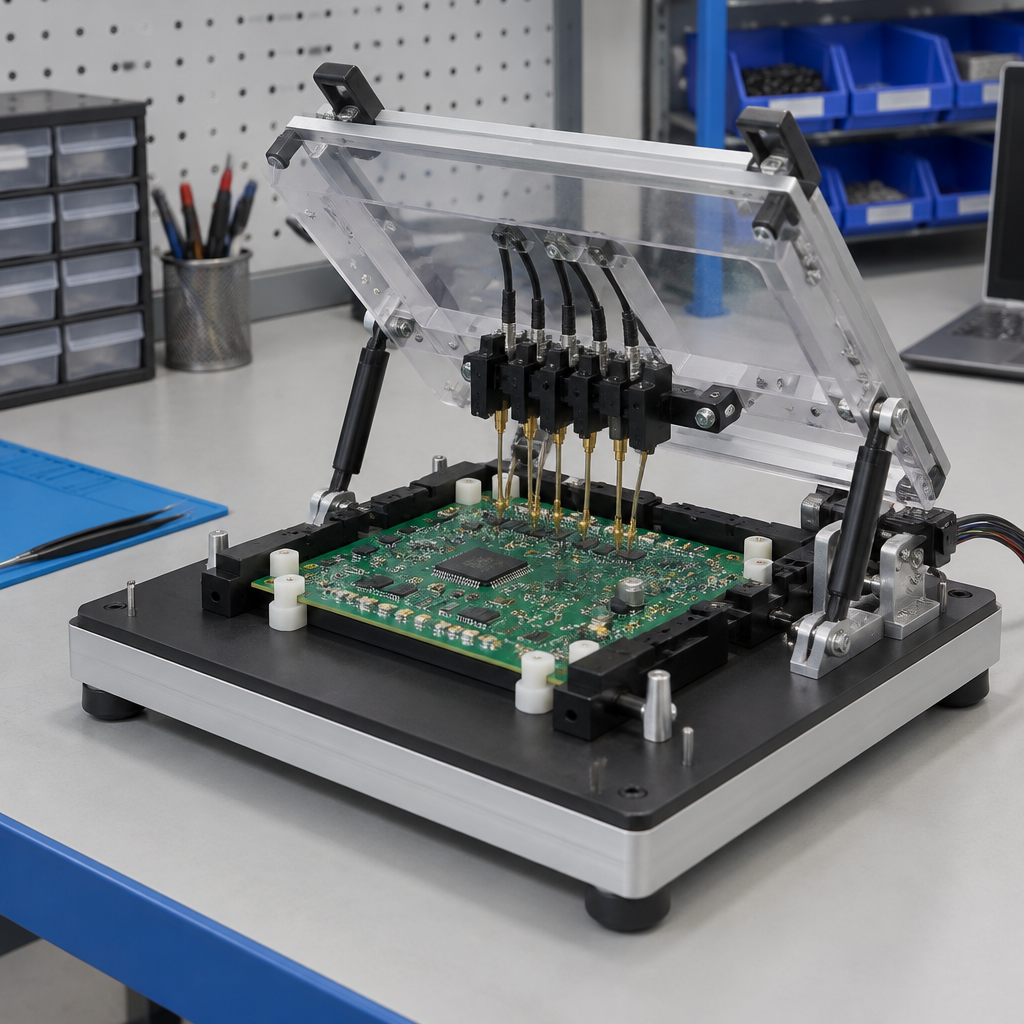
Teradyne Omnyx Edge: What to Measure in an Inline Board Test Pilot
November 9, 2026. Teradyne has introduced Omnyx Edge as an inline board test platform for physical and edge AI applications, with the product positioned around combining ICT, boundary scan, and functional checks in one automated insertion. For manufacturing teams, that description is a starting point, not proof of coverage. What matters in a pilot is how much of the board’s actual fault space the setup can detect on your specific revision, with your fixture, constraints, and line conditions.
Teradyne press release: Omnyx Edge inline board test introduction
Teradyne product page: Omnyx Edge
A useful pilot separates three things that are often mixed together: the methods the system can support, the faults your board is actually prone to, and the faults the fixture can physically expose. ICT may be suited to certain opens, shorts, and component value checks where access exists. Boundary scan may help where devices and nets are designed for it. Functional checks may cover power-up behavior, communication, or limited operational logic. None of those method names should be treated as proof of end-to-end coverage on their own.
A practical first-pilot procedure
- Choose one board revision only. Avoid mixing revisions, rework states, or alternate BOM conditions in the first comparison so that the results are easier to interpret.
- Use existing samples if available: one known-good unit and known-fault units that reflect real manufacturing escapes or field-return patterns. If you do not have fault samples, state that clearly and treat the pilot as a capability check only.
- Map expected fault types to named tests before the run. For example, list which faults should be assessed by ICT, which by boundary scan, and which by functional checks. Note where no method is expected to reach a risk area.
- Record access limits and exclusions. Document unprobed nets, fixture constraints, test-point limitations, device coverage gaps, and any areas where the board cannot be exercised without changing the setup.
- Use the same sample set and timing boundaries for both systems. Record how many known faults each system detects, how many known-good runs it rejects, and elapsed time per board. Keep the counts alongside any rates so the sample size is clear.
- Record which known faults each setup detects or misses. Mark any area outside the test plan as untested; a passing unit does not establish coverage for that area.
- Keep uncovered risks visible. If a fault class is not observable with the present fixture or method set, document it explicitly rather than burying it in a summary score.
For QA and manufacturing engineering teams, the most useful pilot report is one that answers a narrow question: which faults did the setup catch, which did it miss, and why? That is more valuable than a generic pass/fail statement. A board test pilot should also note whether the proposed automated insertion reduces handling complexity, but that observation should remain separate from fault coverage and detection quality.
If Omnyx Edge is being considered for a line change, the decision should rest on measured results from your own board, fixture, and sample set. The vendor’s available methods may be relevant, but coverage on your product must be demonstrated, not assumed.