On November 4, STMicroelectronics announced a unified STM32 microcontroller platform across industrial, automotive and robotics applications. The new STM32A family extends that strategy to automotive and other safety-critical systems. ST says the first three devices are sampling to customers, with broader availability planned in 2027. A shared development environment is a reason to investigate a migration, while the exact part and its evidence still determine what can ship.
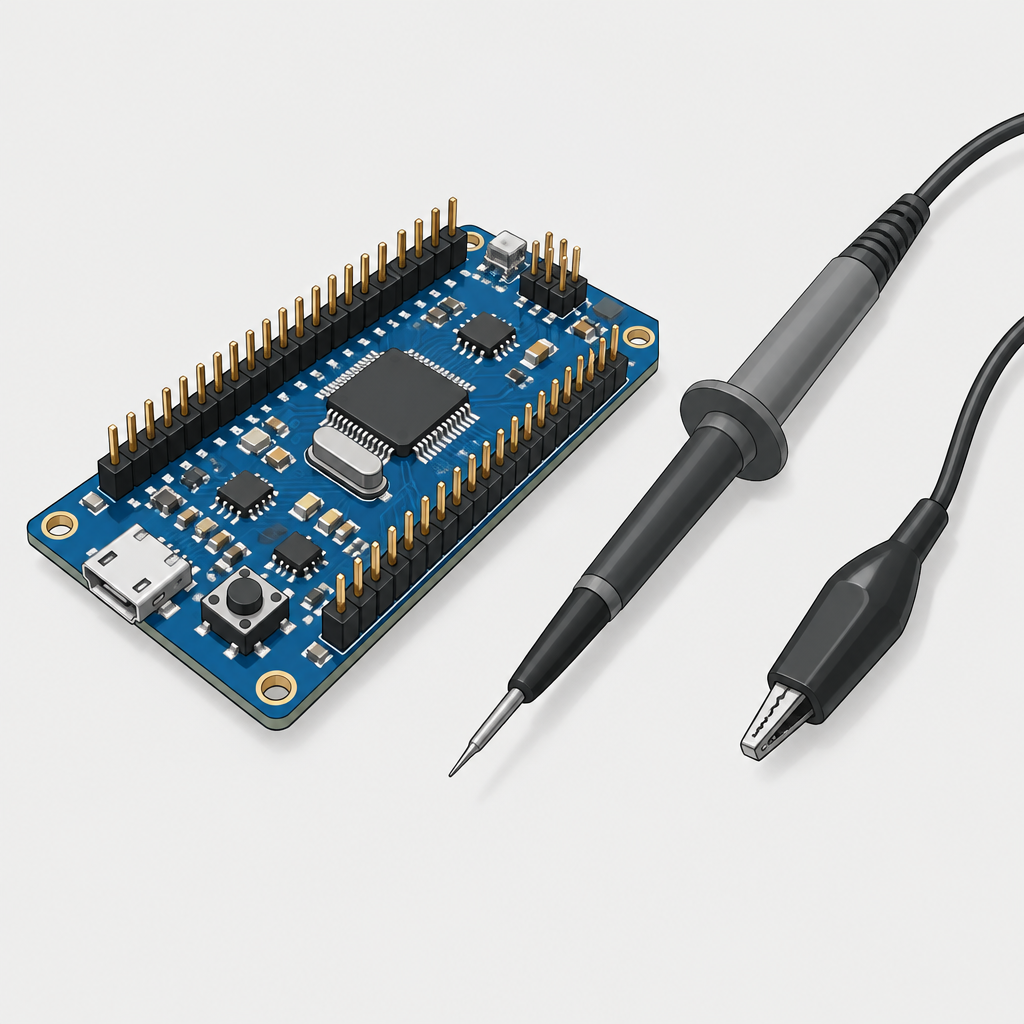
Separate the code from the board
Start by sorting the old firmware into portable logic and code that depends on hardware. In a fictional actuator controller, a function that converts a requested position into an internal target may be straightforward to reuse if its inputs and units stay the same. The code that reads a sensor, configures a timer or drives an output needs to be checked on the new board. Keep the old unit tests and add measurements for startup behavior, timing and fault recovery on the target hardware.
Choose a device for the job
ST positions the STM32A4 for entry-level automotive control nodes and safety systems, the STM32A5 for mid-range safety-critical applications, and the STM32A9 for more demanding multi-domain control. Use those descriptions to make a shortlist. Before committing to a device, ask for part-specific documentation, board and tool support, qualification evidence, and a supply timeline. Sampling to some customers does not establish production availability for your design.
Record what the migration actually proves
For each reused module, name the test that supports reuse and the checks that still need to run on the new target. For example, a host-side test can confirm that the position calculation returns the expected number, while a bench test checks whether the new controller reacts within the required time. Qualification evidence is a separate review item. Even when the same test passes on both boards, document the exact configuration on which it ran.
Check the migration plan
Sources
STMicroelectronics’ November 4 unified STM32 platform announcement