Infineon unveiled AURIX RC1 on November 4, 2026, as its first microcontroller platform based on the RISC-V instruction set. It plans to show the family concept at electronica in Munich, November 10–13, and targets samples in the first half of 2027. That is a sampling target, not a production availability date.
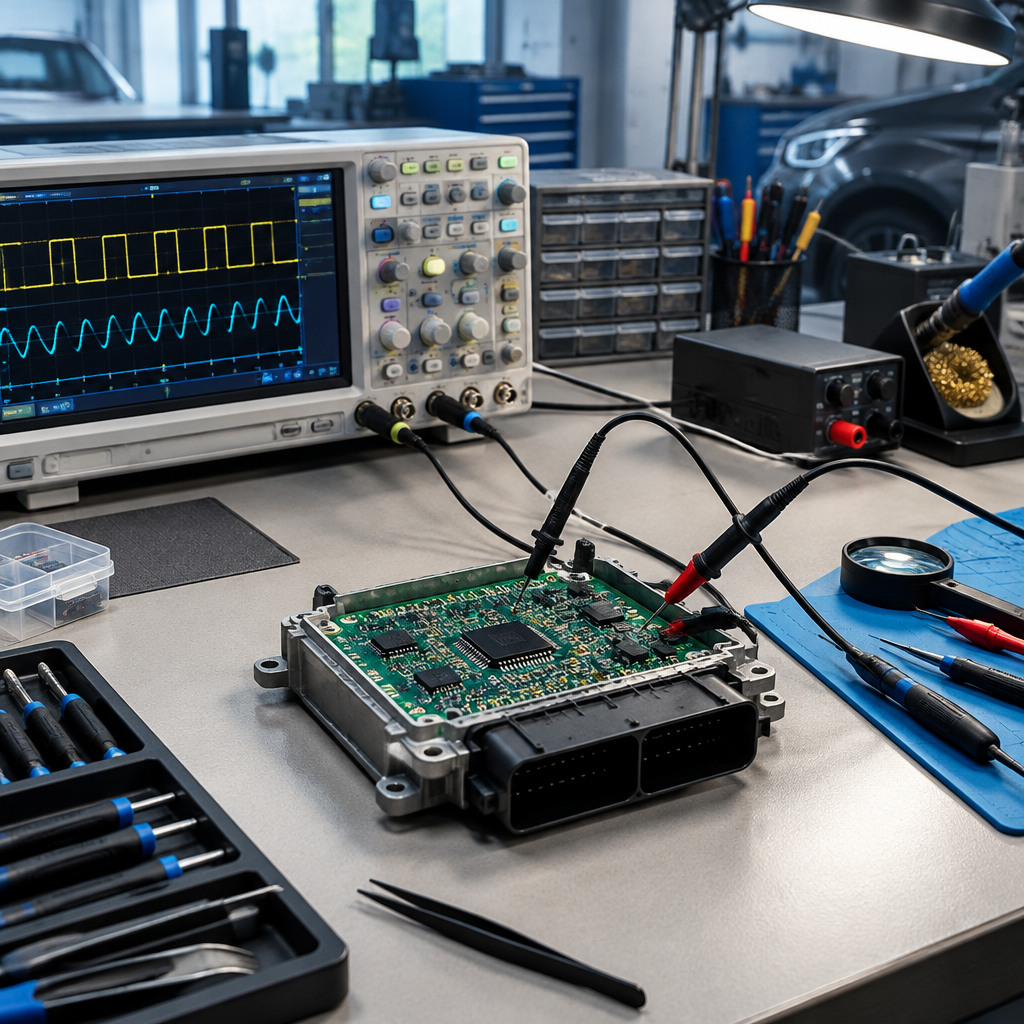
Write the deadline before choosing the chip
Infineon is targeting real-time control across automotive applications such as zone, body and chassis controllers. For a team evaluating the platform, a useful first question is whether a specific control task can finish on time when the system is busy. Write down the event that starts the clock, the action that stops it and the maximum acceptable delay. Match the test to the exact sample configuration; Infineon describes different resources for different applications across the family.
Test delays under a representative load
In a fictional bench test, a controller must process a sensor update within 2 milliseconds. An average of 0.8 milliseconds looks comfortable, but a measured delay of 2.4 milliseconds misses the deadline by 0.4 milliseconds. Run the same test with the background traffic and tasks expected in the intended design. Record the longest observed delay and the number of deadline misses alongside the average.
Keep the workload, sample revision, firmware and measurement method with the results. A clean bench run supports a decision about what to test next, but does not prove that every possible delay is bounded or replace application safety validation. No RC1 hardware was tested for this article.
Infineon’s November 4 AURIX RC1 announcement