On November 5, 2026, Japan’s PowerX said it signed a strategic partnership agreement with Energy Vault Japan, a subsidiary of Energy Vault Holdings. The companies will explore supplying up to 1.5 gigawatt-hours of PowerX products for U.S. deployment in 2027. PowerX described the agreement as nonbinding and the volume as indicative. The announcement does not identify a single battery rated at 1.5 GWh.
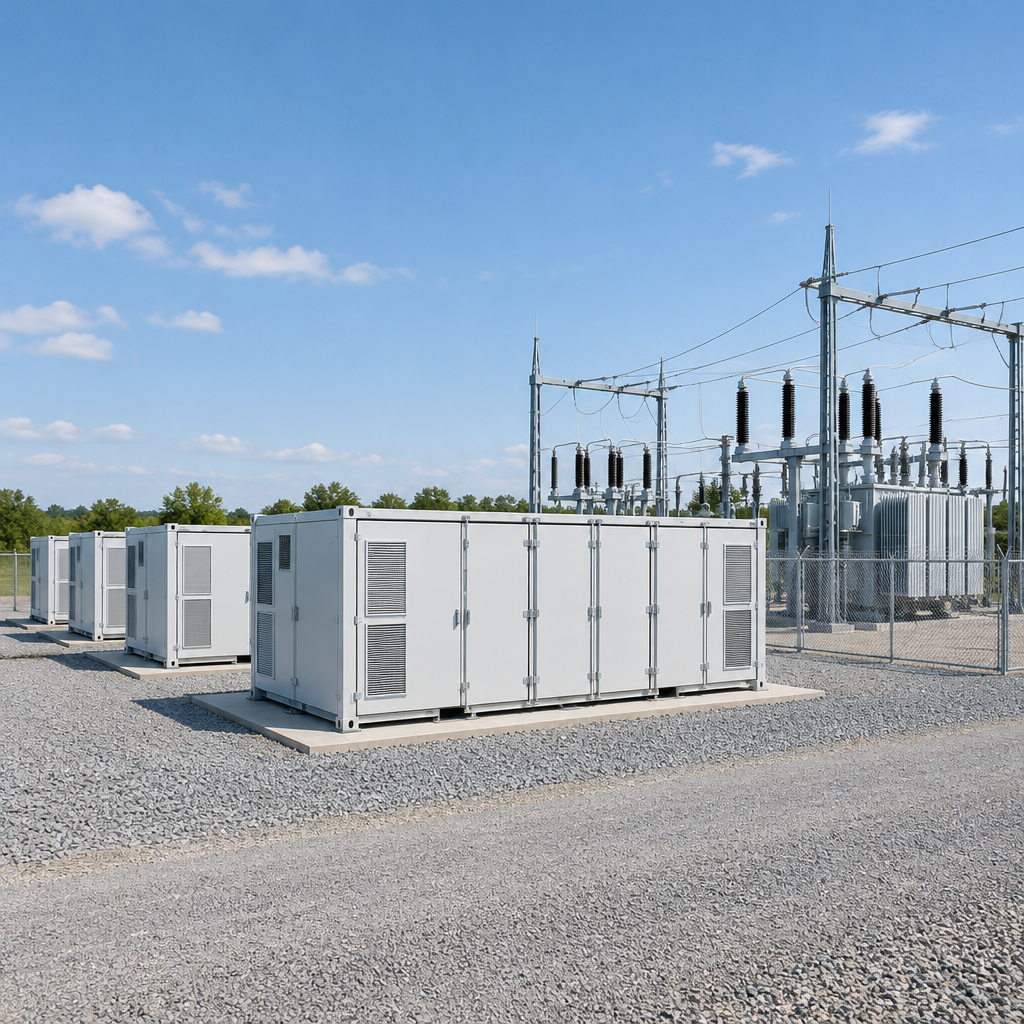
Read the power and energy ratings together
A megawatt (MW) measures power: how quickly a battery can deliver energy. A megawatt-hour (MWh) measures energy: how much it can store or deliver. For an idealized runtime estimate at a constant load, divide usable energy in MWh by output in MW.
Imagine a site with 200 MWh of usable energy and a battery that can discharge at 50 MW. At that constant output, the simple estimate is four hours. If the same battery can sustain only 25 MW, the estimate at 25 MW is eight hours. The second case runs longer because it serves a smaller load. These numbers are fictional and do not describe any PowerX product.
What to ask for in a site specification
- The usable MWh at the agreed measurement point, including any reserve the operator keeps back.
- The continuous discharge rating in MW at that same point.
- The conditions attached to both numbers, such as temperature or the stage of battery life.
- Whether the published figure describes one site or adds together multiple proposed deliveries.
A supply announcement can signal the scale of a potential deal. A site specification is what lets you estimate how long a battery could serve a particular load. Keep the two figures in separate columns when you compare projects.
Check your runtime estimate
Sources
PowerX’s November 5 partnership announcement (PDF)
U.S. Energy Information Administration: battery power and energy capacity