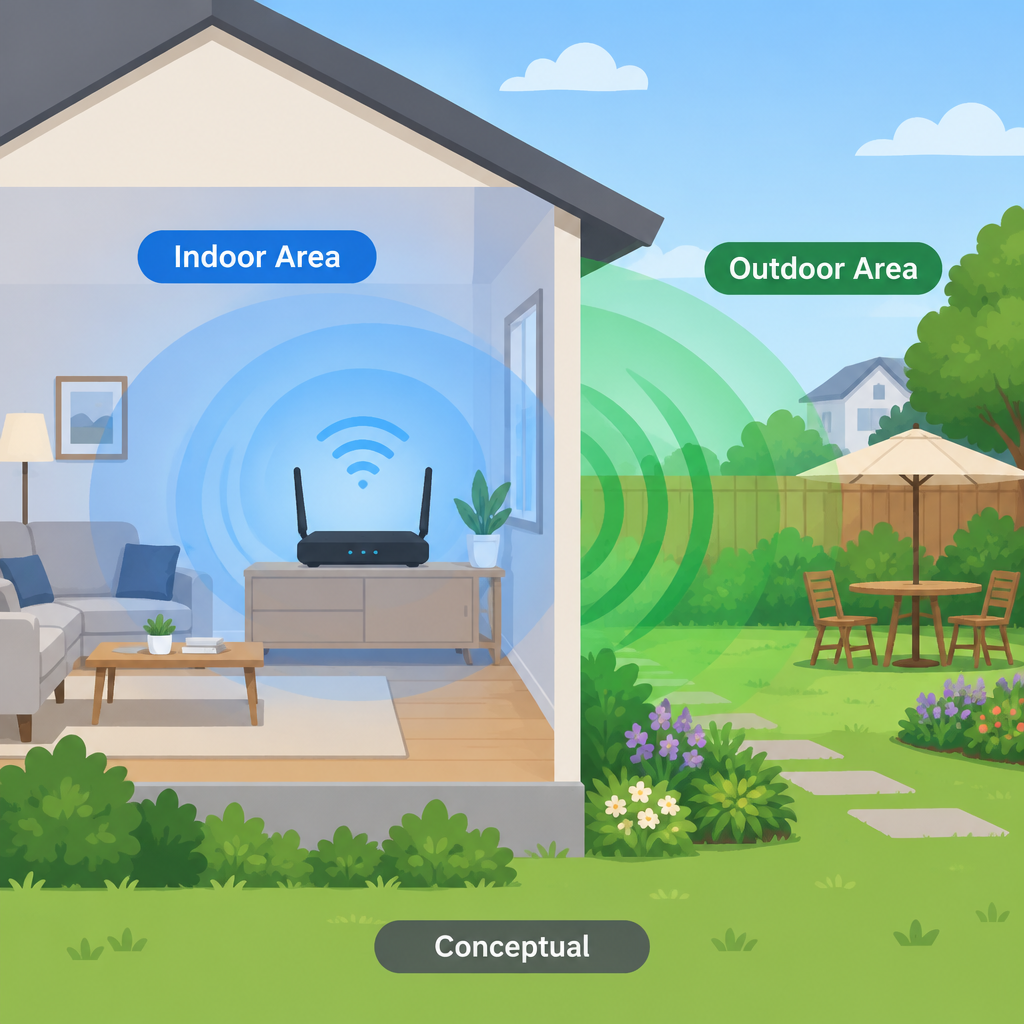
WavKong announced the commercial launch of its V2700 Wi-Fi 6 router on October 30, 2026. Its up-to-15,000-square-foot coverage figure sounds like a simple way to compare homes. The useful detail is what area the company actually counted.
Primary source: WavKong’s October 30 commercial-launch announcement
Keep indoor and outdoor together
The release describes company testing at a single-story, wood-frame residence in California. The 15,000-square-foot figure combines indoor and outdoor coverage. That wording does not establish coverage of 15,000 square feet of indoor floor space, or the same result through every building’s walls.
WavKong also describes tests in three-story wood-frame houses. Those are additional settings, rather than evidence that the single-story California result applies unchanged to every three-floor home. The release says results vary with materials, interference, placement, client capabilities and network configuration.
Primary source: current V2700 product information
Try a fictional area comparison
Imagine an invented property where a test map counts 4,000 square feet indoors and 11,000 outdoors. The combined area is 15,000 square feet. Now imagine a different building with 15,000 square feet entirely indoors. Its identical total does not make the two test settings identical.
These areas are fictional and are not a reconstruction of WavKong’s test property. The exercise shows why a useful comparison needs an area definition alongside its number. It does not predict reception, speed or the number of routers either property would need.
Write down the task at each location
For a trial on a network you control, choose the locations that matter before changing equipment: a home-office desk, an upstairs room or an outdoor camera position, for example. Record what each location needs to do. A connection indicator and a completed video call are different observations.
Use the same client device and repeat the same task when comparing setups. Record router position, band, test time and relevant configuration with the results. Keep measurements from a local-network test separate from an internet test, and label which one you performed. Do not turn a single successful attempt into a whole-property guarantee.
Preserve unsuccessful results too. If a location fails the task, record the observed symptom rather than guessing its cause. Compare one router with the complete alternative setup you would actually use; record the number and placement of devices in each configuration.
Ask for the evidence behind the comparison
Before relying on the coverage claim for a purchase, ask which test locations were counted, what counted as usable service, which clients and settings were used, and how indoor space was separated from outdoor space. An unanswered question should remain unanswered in your worksheet.
No V2700 was installed or benchmarked for this guide. The announcement supplies a current commercial milestone and a clearly qualified company result. The fictional example and proposed trial record help a reader compare that claim with an actual requirement; they do not establish that the router will meet it.
What Area Does the Claim Describe?