Edison Partners announced a $28 million growth investment in Numeracle on October 28, 2026. The investor says the funding will support expansion of the business-identity platform. For a U.S. business whose outbound calls display a spam warning, the immediate operational question is narrower: where does the warning appear, and what evidence would help investigate it?
Edison Partners’ October 28 Numeracle announcement
A phone number can have more than one observed result
Numeracle’s spam-remediation FAQ says different carriers and analytics systems can treat the same number differently. It also distinguishes registration from remediation: supplying business information does not, by itself, remove a label or resolve underlying reputation concerns. Outcomes and timelines vary by ecosystem, and a removed label can return.
Numeracle’s spam-remediation FAQ
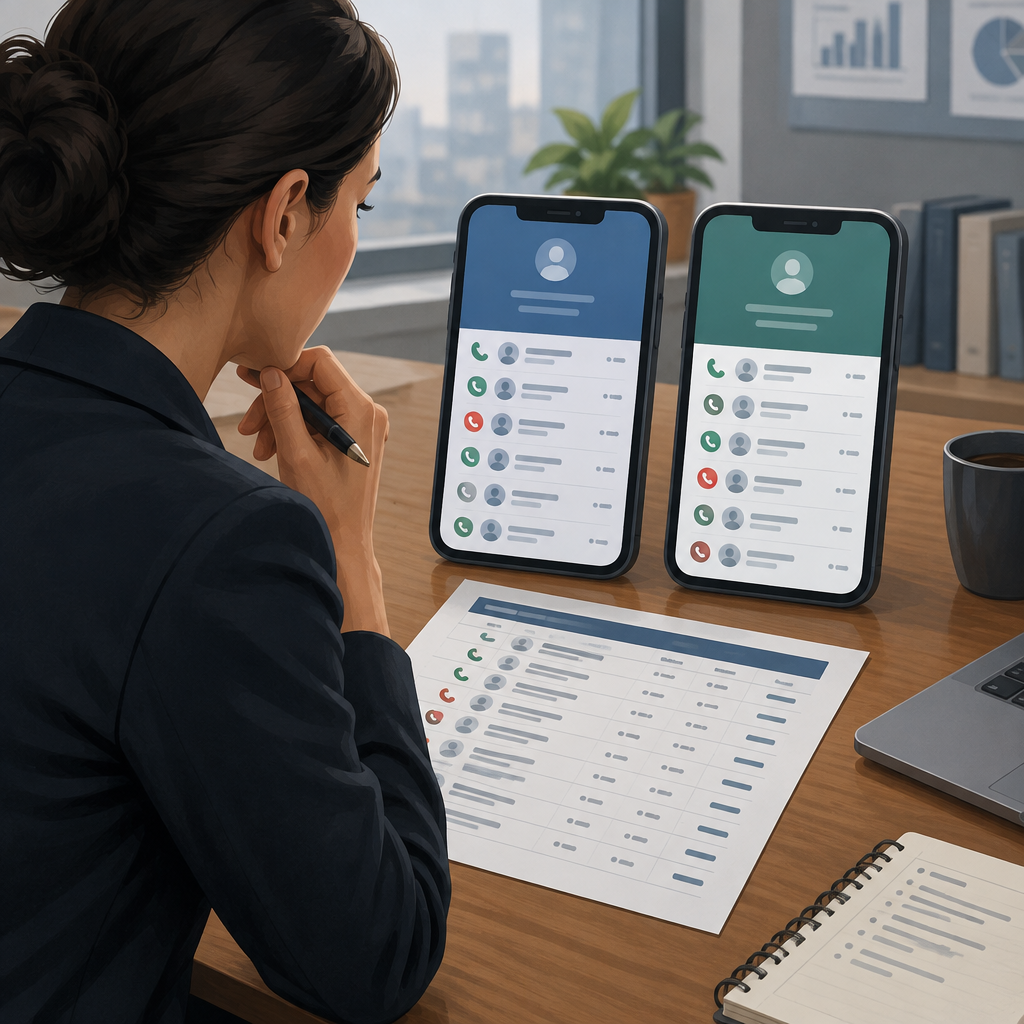
Here is an original fictional exercise. A service company uses one outbound number. An agreed test call to a staff-controlled phone on Network A shows its number without a warning. A second test to a staff-controlled phone on Network B shows a spam label. These are invented observations, not Numeracle test results or claims about any actual carrier.
The useful conclusion is that the two tests produced different displays. Neither screenshot establishes how every customer sees the number. Keep both records rather than replacing them with a single statement that the number is either clean everywhere or blocked everywhere.
Build a small evidence record
For each agreed test, record the originating number, receiving network, receiving device, date, time and exact displayed wording. Note whether the phone rang, displayed a warning or showed a name. A label and an unanswered call describe different observations; preserve that distinction.
Use staff-controlled devices and agreed test calls. Keep customer details out of the screenshots you circulate. If a customer independently reports a warning, capture only the relevant description and follow your organization’s process for handling their information. Avoid asking customers to disclose unrelated call histories.
Then verify the business’s own inventory: which team uses the number, which service originates its calls, and whether its business details are current. Record facts you can establish. An observed warning does not identify its cause, and a decline in answer rates alone does not establish that labeling caused it.
Ask what the proposed service actually does
Numeracle’s product documentation separates branded caller-name display from number reputation management. It also says registration does not guarantee permanent immunity from spam labels. Ask a provider which networks and display conditions it supports, who handles an existing-label investigation, and what evidence will show the outcome.
Numeracle’s number reputation management documentation
For the fictional case, ask the investigator to explain the Network B result without discarding Network A’s different observation. Keep the ticket reference and supporting records together. After a reported correction, repeat comparable agreed tests and save the new dates. This is a proposed checking method, not a promise of a particular product workflow or removal deadline.
Keep caller visibility separate from consumer trust
The Federal Trade Commission warns that callers can fake the name or number shown on caller ID. A business should not tell customers that a familiar display alone proves a call is genuine. Make an independent contact route easy to find through the organization’s established public channels.
FTC: how callers can fake caller ID
A useful review ends with a bounded statement: what was observed, on which network and device, when it was checked, and what remains unresolved. The investment announcement explains Numeracle’s growth plans; the evidence record helps your team decide what to investigate next.
Read the fictional call tests