On November 5, 2026, the National Institute of Standards and Technology described INSIGHT, a research pipeline that turns indoor scans into structured building data. NIST’s current work focuses on pre-incident planning and includes a human reviewer who can correct the generated map. The project offers a useful lesson for anyone evaluating an indoor mapping tool: a blank spot can mean the scanner never saw it.
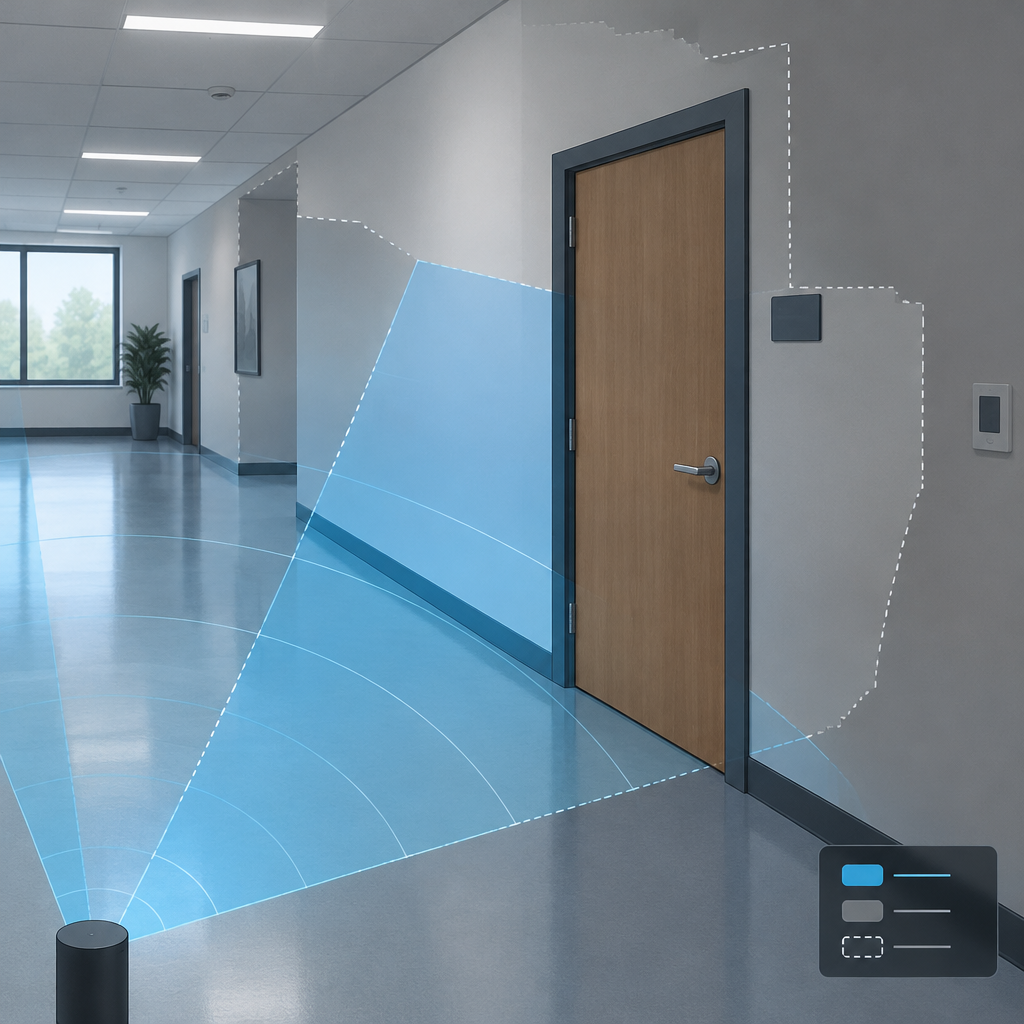
Record what was observed and what was skipped
Consider a fictional office scan. The scanner passes down a corridor, but one room is locked. The resulting map may show the door without showing the room’s contents. A reviewer should label that room unverified rather than treat the blank space as evidence that nothing is there.
- Keep the scan date and coverage area with the map.
- Mark rooms and objects the scan did not verify.
- Give each correction a reference, such as a new observation or a current facility record.
- Record who checked the correction and which map version contains it.
Check how the next viewer sees uncertainty
Show the reviewed map to someone who did not take the scan. Ask them to point out which parts were observed and which are still unknown. If both look the same, improve the labels before relying on the output for planning. This is an evaluation exercise, not an operational emergency map.