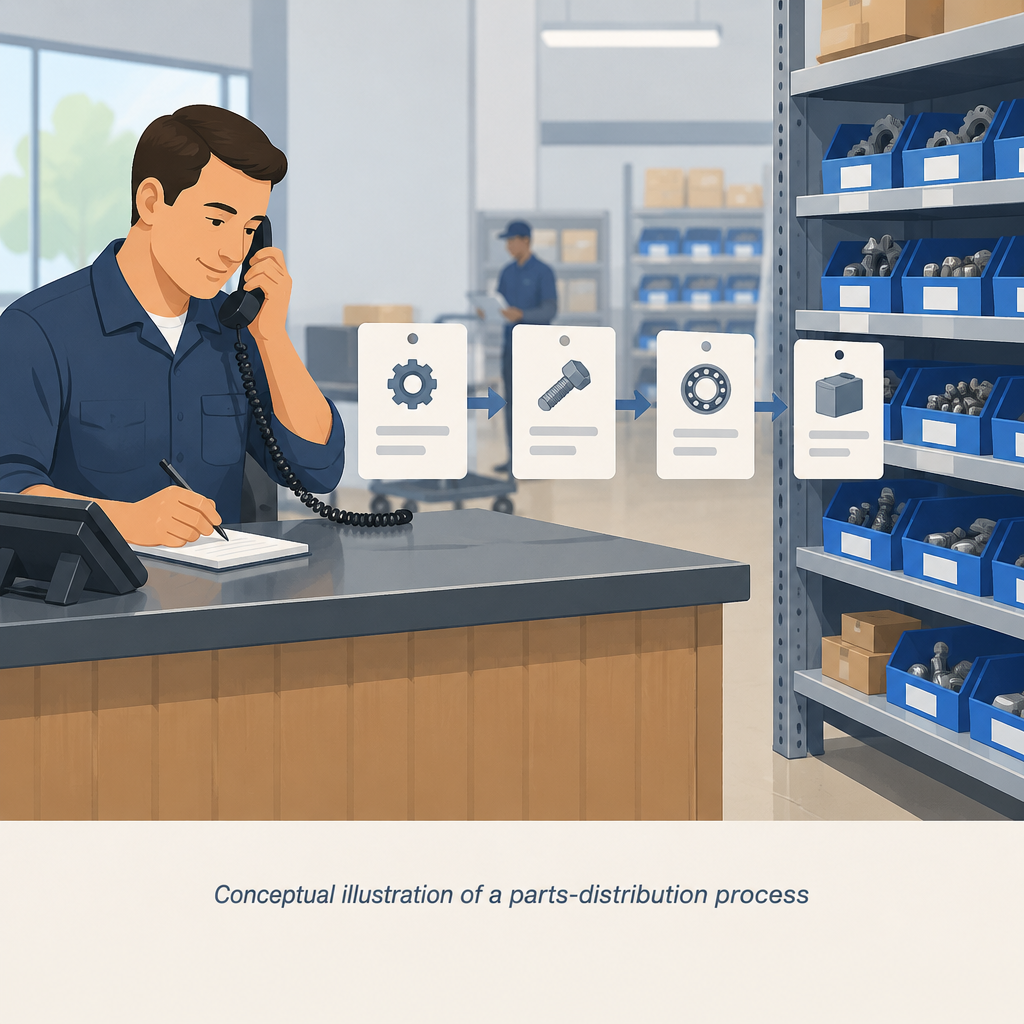
WHI Solutions announced Nexus for its Nexpart parts-ordering platform on October 30, 2026. The company says its first capability answers phone calls and takes orders around the clock through distributors’ existing Nexpart workflows. For a distributor evaluating it, a useful demonstration should follow an after-hours request all the way to the next operational handoff.
WHI’s October 30 Nexus launch announcement
Start with the announced scope
According to WHI, initial conversation support includes English and Spanish, with more languages in development. It describes routine calls as the starting point, while counter staff handle complex requests and exceptions. Those statements describe the supplier’s intended workflow; they do not establish the outcome of a particular customer call.
The announcement describes phone-ordering availability. A buyer should obtain the distributor’s own confirmation of stock, collection arrangements and delivery timing before planning a repair around an after-hours request.
Walk through one fictional call
Imagine a repair shop calling at 10 p.m. for two brake components needed the next morning. This is an invented demonstration brief, not an actual Nexus order. Give the demonstrator a clearly identified test vehicle and intended part specification, then ask them to show what the caller hears and what staff see in the ordering record.
Record the requested quantity, the selected item and the account used. Ask which details must be confirmed before the order proceeds. If the caller corrects a quantity from two to one, follow that correction through the saved record. Treat the correction as a test case until the demonstration proves how it is handled.
Put a timestamp beside each handoff
Use separate rows for call answered, request recorded, order confirmed, goods ready and delivery or collection completed. Ask the distributor which events its system records and which require staff action. Leave any unshown event marked unverified.
For the fictional 10 p.m. request, a call timestamp alone cannot demonstrate a next-morning delivery. Ask the demonstrator to identify the evidence that would establish the agreed fulfillment arrangement. This exercise evaluates the handoff; it does not predict the distributor’s service hours or promise a particular delivery time.
Include an exception before judging the demonstration
Propose a second test in which the requested item is unavailable or the caller cannot confidently identify the correct part. Ask how the request reaches a person, what information transfers and what the caller is told about the next step. These are proposed evaluation questions, not assertions about documented Nexus features.
Keep a compact record of each test: expected result, observed result, saved evidence and unresolved question. Repeat the same brief when comparing another ordering method. A fast answered call is useful, but your operational decision also needs evidence of the order details and the agreed next action.
Before rollout, obtain the applicable setup quote and confirm the distributor locations, call routing and supported languages in your intended configuration. Use a controlled demonstration before relying on a live customer order. No call, installation, purchase or delivery was tested for this guide.
Check the after-hours handoff