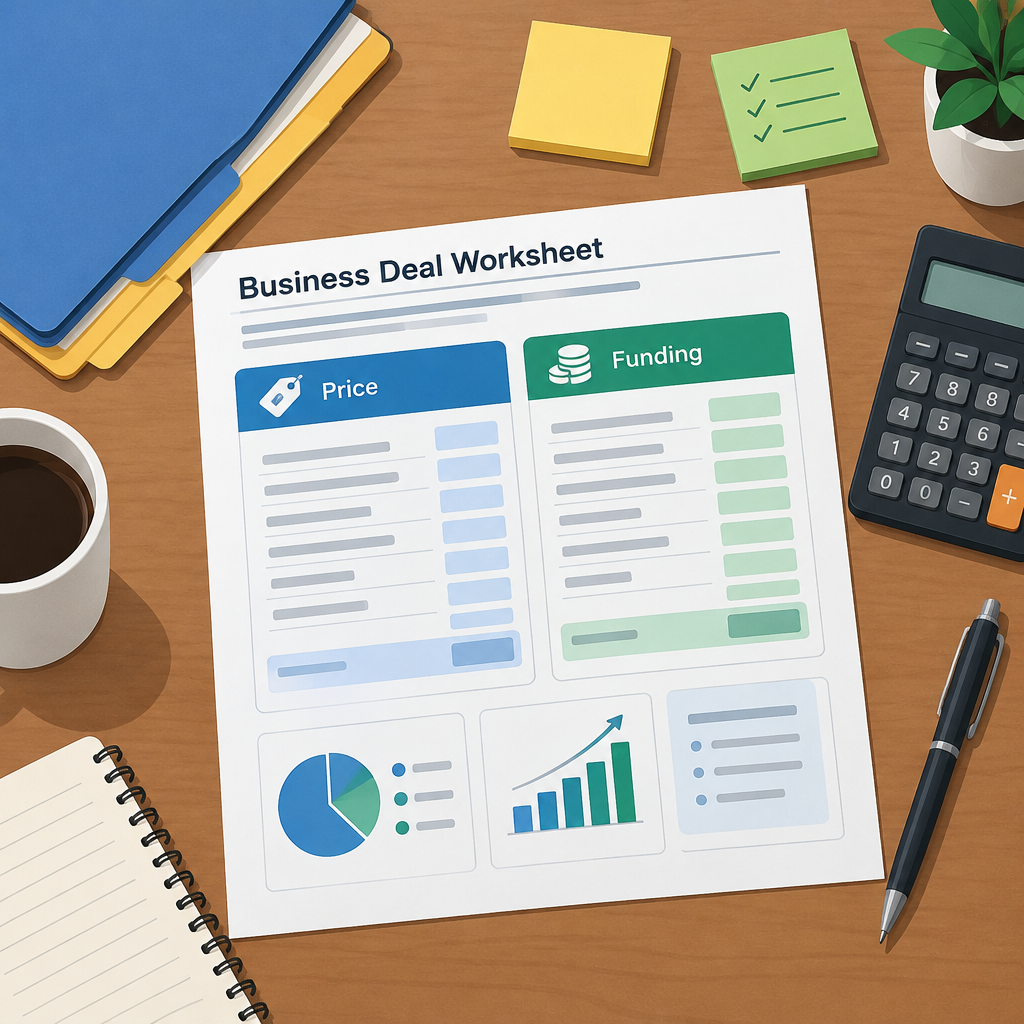
Guidewire’s October 27, 2026 announcement describes an agreement to acquire Hyperexponential, a commercial insurance underwriting and pricing software provider. A useful way to read the deal is to separate the purchase price, possible later consideration, funding and closing status.
What the announcement establishes
The company states a $1.7 billion cash base price, subject to adjustments, plus up to $400 million linked to specified recurring-revenue targets. It expects closing in its fiscal second quarter of 2027. Planned funding includes $1 billion of new term debt and existing cash. These are announced terms and expectations, not confirmation that closing or every payment has occurred.
Guidewire’s October 27 announcement and transaction details
Put the two price components on separate lines
Adding the stated base and the maximum contingent amount gives $2.1 billion before adjustments. That arithmetic does not make the full amount an unconditional payment. Keep “up to” beside the conditional component whenever you copy the figure into a note or presentation.
Use four fields in a deal worksheet: component, amount, condition and evidence date. Give the base price and contingent consideration separate rows. If you do not have the detailed target definitions or adjustment mechanics, mark them as unreviewed. A missing term is a question to resolve, not permission to supply an estimate.
Use a hypothetical exercise to avoid double counting
Imagine an unrelated software purchase with a base of 80 units and a maximum conditional payment of 20 units. A buyer plans to borrow 50 units toward the purchase. The maximum of the two stated price components is 100 units; adding the borrowing would incorrectly produce 150. Funding describes where money may come from, while consideration describes what may be paid.
Now suppose the exercise’s conditional payment turns out to be 12 units. The two price components total 92 units before any other adjustments. This example illustrates bookkeeping categories only. It is not a forecast of the Guidewire transaction, its payment probability or its final cost.
Keep the event timeline separate from the money
Give agreement, closing and later performance conditions their own entries. Next to each entry, record whether it is completed, expected or unresolved and attach the document supporting that status. Preserve the company’s fiscal-period wording when copying a deadline; do not silently replace it with a calendar quarter.
A software customer can use a separate operational checklist: current contract, supported product version, promised support period and any formally communicated migration requirement. An acquisition headline alone does not answer those questions. Ask the supplier for the relevant product or contract notice before scheduling an operational change.
For the next update, compare new documentation against the saved worksheet rather than rewriting every field from a fresh headline. Change only the entries supported by the new record. This provides a clear account of what became known and what remains conditional, without predicting investment returns or assuming product integration is finished.
Read the deal categories