Anduril and Qualcomm’s October 27, 2026 BlueChip announcement describes functional laptop prototypes and plans to start taking orders in 2027. For organizations tracking domestic computer manufacturing, the useful starting point is the scope of the sourcing claim: more than 90% of prototype component procurement cost comes from US and allied-country suppliers.
Qualcomm’s October 27 BlueChip announcement
Keep the measurement attached to the claim
That figure measures spending on components, not the number of components. It combines US and allied-country suppliers, rather than identifying a US-only share. It describes prototypes. A fully domestic supply chain remains a long-term goal. The release identifies Snapdragon X Series computing and plans for circuit-board assembly at Anduril’s Arsenal-1 facility in Ohio.
Those distinctions matter when comparing supplier statements. A percentage without its denominator, geographic grouping and product stage can answer a different question from the one a buyer is asking. Keep those three fields beside the number whenever it appears in an internal briefing.
A fictional example: spending share versus part count
Imagine a fictional device with 100 component line items costing US$1,000 altogether. Suppose 10 expensive items account for US$920 and the other 90 items cost US$80. The first group represents 92% of component spending but only 10% of the line-item count. Neither percentage is wrong; they measure different things.
This is an arithmetic illustration, not BlueChip’s bill of materials. It shows why a buyer cannot convert a cost percentage into a component-count percentage. Nor does a combined geographic group disclose how spending is divided between its members. Ask for the breakdown that answers your actual purchasing question.
Record evidence for the product you may eventually order
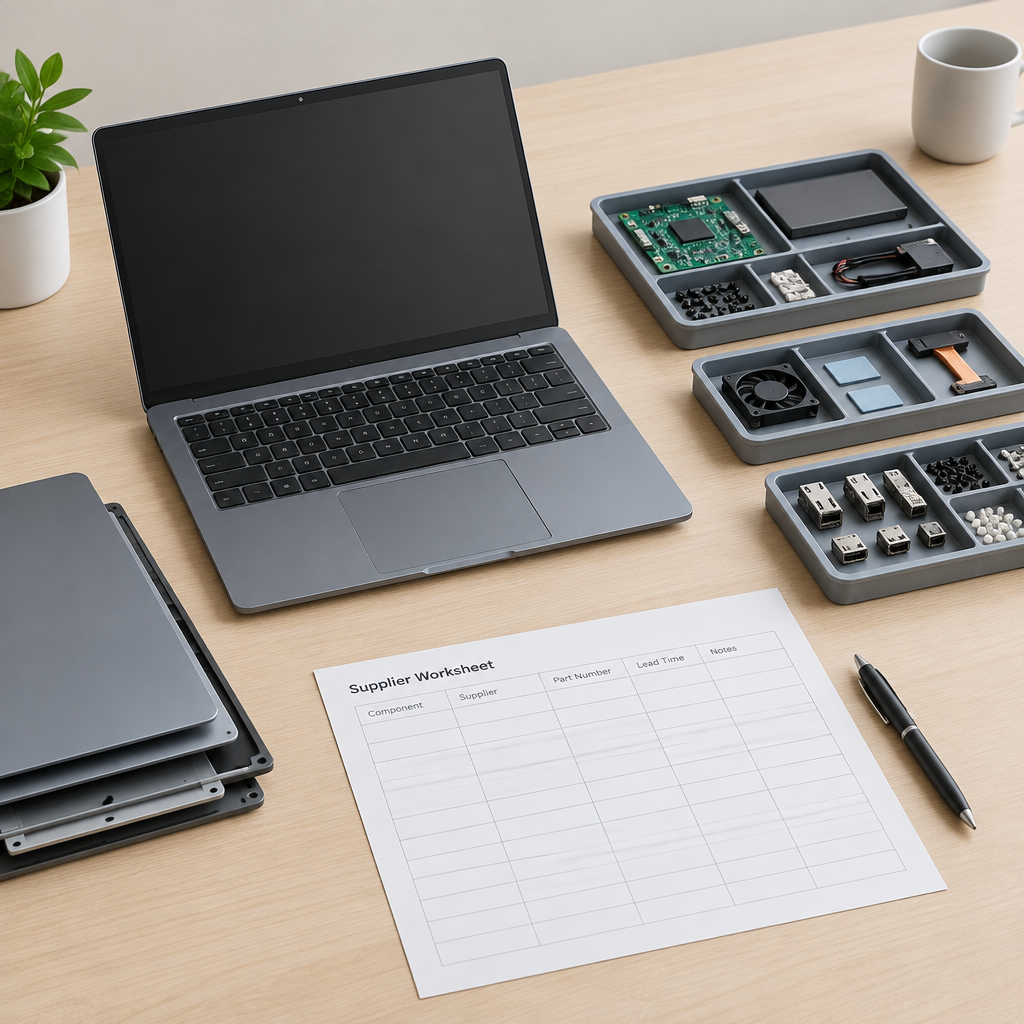
Create a short supplier record with separate entries for the prototype, the proposed production configuration and the unit offered in a future quotation. In each entry, record the source date, exact configuration, geographic definition, measurement method and supporting document. Leave unknown fields blank rather than carrying prototype figures into a later product row.
- Sourcing: request the cost denominator, geography breakdown and scope of the supporting supplier evidence.
- Manufacturing: ask which operations occur at which facilities and which are still planned.
- Availability: obtain an order-opening date and a separately stated delivery commitment for the quoted configuration.
- Operational fit: request specifications, application compatibility, service arrangements and replacement-part availability before comparing total cost.
These are proposed buyer questions, not assertions that the companies have supplied those answers. An interest registration, a production plan and a delivery commitment should occupy separate fields in the record. This makes updates easier to assess without turning each announcement into a purchasing decision.
What this announcement supports now
The companies target government, defense, first responders and public safety among their intended markets. That positioning does not itself establish suitability for a particular organization. US buyers can use the source record to prepare vendor questions; readers in India can use the same method when assessing any localized-manufacturing claim, without assuming local availability.
The next useful comparison will connect a specific offered configuration with dated sourcing evidence, operating requirements and a delivery commitment. Until then, preserve the announced prototype measurement as written. It is a basis for questions, rather than a complete procurement specification.
Read the sourcing claim carefully