Robots on the line, components in the robots
Aptiv’s Nov. 6, 2026 Shanghai release points to two different robotics milestones that should not be blended together. One is about robots being gradually deployed on Aptiv production lines. The other is about Aptiv supplying high-performance compute and intelligent power distribution for robots from its partners. They are related, but they answer different questions: one is about use on the factory floor, the other is about hardware planned for future robot systems.
According to Aptiv, its separate agreements with TARS and Shanghai Electric are meant to move in parallel. In one direction, partner robots are being introduced gradually into Aptiv operations, moving from validation toward scale. Aptiv said the deployment involves hundreds of robots, but that should be read as a company report of gradual deployment rather than independently verified proof that all of those robots are already operating at scale. In the other direction, Aptiv said its compute and power systems are planned for robots from both partners, with initial production planned by the end of 2026. That is a production plan, not a confirmed shipment record.
Why the distinction matters
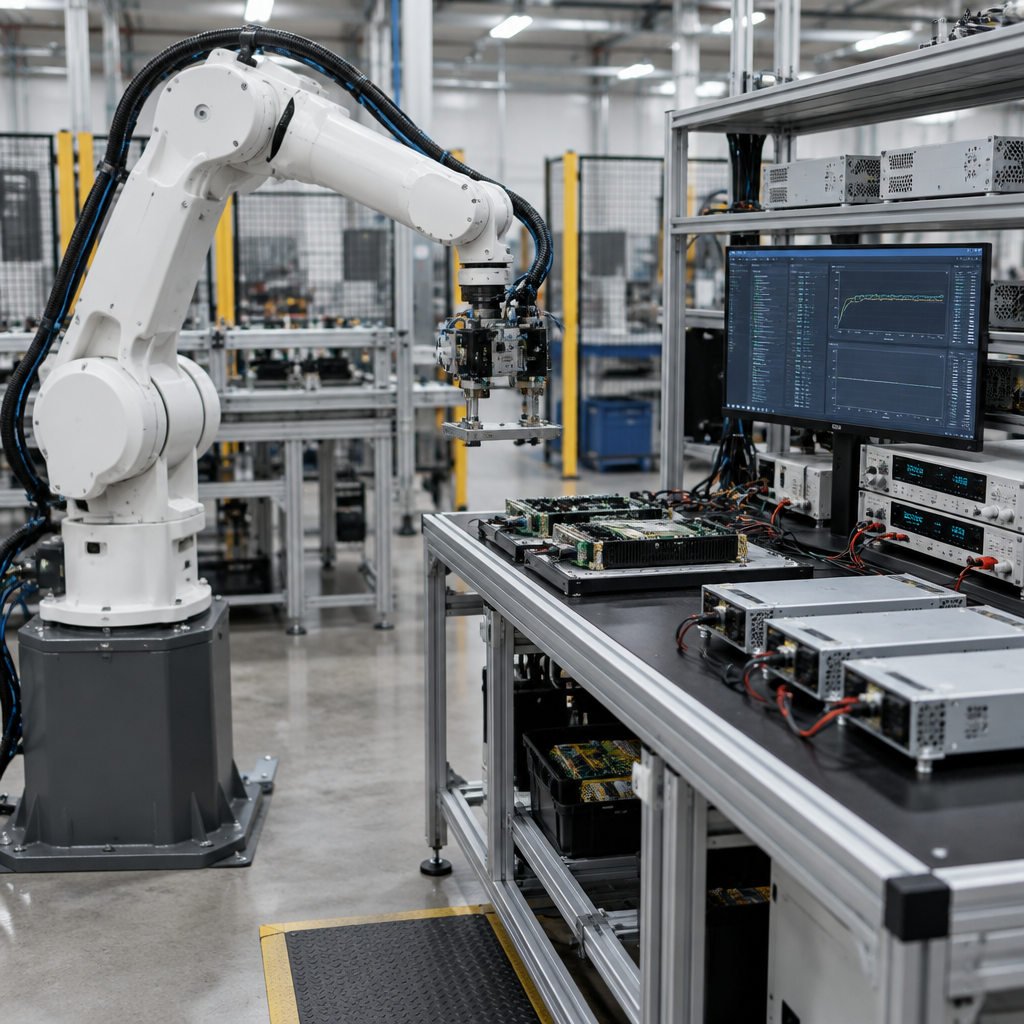
It helps to imagine a fictional factory station on an assembly line. Plant teams may watch whether a robot can repeat the same shift patterns, how often an operator needs to step in, and how quickly the station recovers after a pause. Those are operational questions. They help teams understand whether a machine is becoming dependable in that specific environment. But even if those numbers improve, that does not automatically prove a wider deployment is complete or that every line is ready for scale.
Component teams, meanwhile, would track a different set of checkpoints. They might look at whether a prototype integrates cleanly with the robot platform, whether an initial production run begins on schedule, and whether any hardware is actually shipped. Those are supply and product-readiness questions. An initial build can show progress, but it does not by itself validate deployment on production lines, and it does not guarantee the operational outcome of the robot system.
What would show progress?
For factory deployment, ask how many stations have moved beyond validation and what counts as a routine production shift. For component integration, ask what the year-end production target covers and when the first units are expected to ship. Aptiv has outlined both tracks, but its announcement does not provide those details.
For readers following industrial robotics, the key is to keep these tracks separate. One track asks how well robots perform inside a plant. The other asks whether the supporting electronics and power systems are moving from prototype to production. Aptiv’s release suggests both are advancing, but they are not the same milestone, and one should not be used to assume the other has already been achieved.