Allegro MicroSystems’ November 5, 2026 ADAS announcement presents its A81481 power-management IC as a route to lower 48V power-architecture bill-of-materials costs, with savings of up to 50%. For a purchasing or engineering review, the useful next step is to define the circuit being compared and the costs included in its baseline.
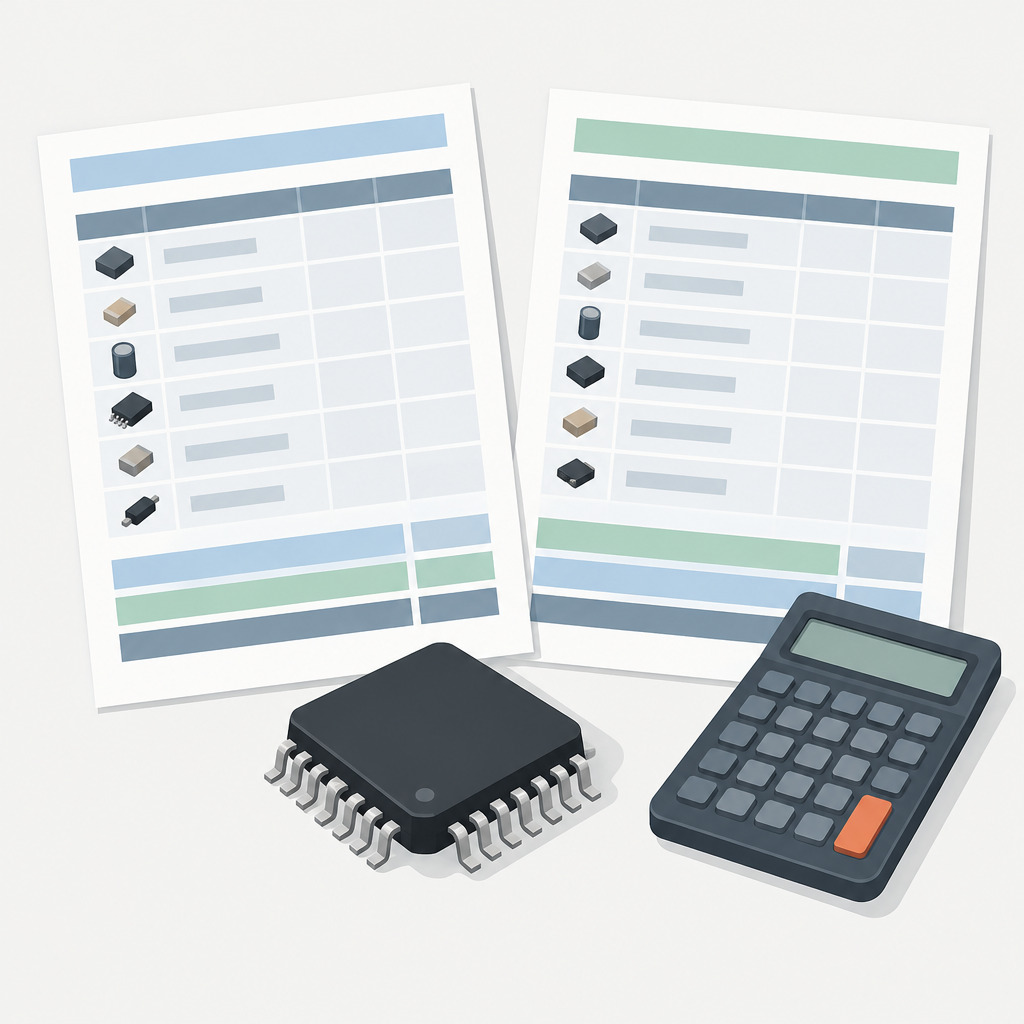
Match the compared functions
The announcement contrasts a conventional combination of a 12V PMIC, a separate 48V pre-regulator and supporting protection circuits with an integrated device. The current A81481 product page describes dual buck regulators and five low-dropout regulator outputs. This integration explains the proposed comparison, but a component list alone does not supply a price for a particular customer’s design.
Ask for the reference configuration and the line items included in the quoted saving. Keep the operating requirements and included functions consistent between the alternatives. A reduction in the number of parts and a reduction in their combined purchase cost are separate quantities.
Try a fictional cost comparison
Suppose a fictional control unit has a $40 power-circuit BOM and $60 of other BOM items, making $100 in total. An alternative power circuit costs $25 under the same purchasing assumptions, while the other items remain $60. The power-circuit reduction is $15 divided by $40, or 37.5%.
The complete fictional unit now costs $85. Its total BOM reduction is $15 divided by $100, or 15%. The dollar saving is the same in both calculations; the percentage changes because the baseline changes. Neither result is 50%, and neither calculation is a quote for an Allegro-based design.
These invented numbers isolate the scope of a comparison. They omit assembly, engineering, testing and other project costs. If a budget needs those items, add them as separately labeled entries rather than silently treating a component-BOM percentage as a reduction in every project cost.
Keep the claim and your estimate separate
- Scope: identify the power circuit and functions included in each option.
- Price basis: retain currency, quantity, quote date and any purchasing assumptions.
- Baseline: record the original included cost before calculating the percentage change.
- Evidence: distinguish the manufacturer’s advertised saving from your own quoted comparison.
- Project budget: list costs outside the component BOM separately.
Use the same denominator when comparing quotations, then review what changed between configurations. Allegro’s advertised figure is a reason to investigate a design option; a budget estimate should retain its own supporting line items. This article explains cost arithmetic and disclosure scope. No circuit was designed, hardware tested or supplier quotation obtained.
Which cost baseline are you using?
Primary sources
Allegro: November 5 ADAS portfolio announcement and cost claim