Can You Download Block’s Dessa? The Short Answer Is Not Confirmed Publicly
Block’s Dessa page, checked on October 24, 2026, points to a speech-first AI preview that is interesting for researchers and voice-AI builders. But the public material reviewed today does not confirm a public download, open model weights, an API, pricing, licence terms, or a release date. A navigation label that says “Download” is not the same thing as a confirmed downloadable product, and it should not be treated as proof of availability.
What Block does present is a research-style demo and a waitlist, including a small-group early-access form for AI safety researchers that asks for a name, institutional email, and an optional Scholar or blog link. That is very different from a general-purpose product listing. So the clearest answer is: you can request access, but you cannot assume you can download Dessa today from the reviewed material alone.
What Block Says Dessa Is
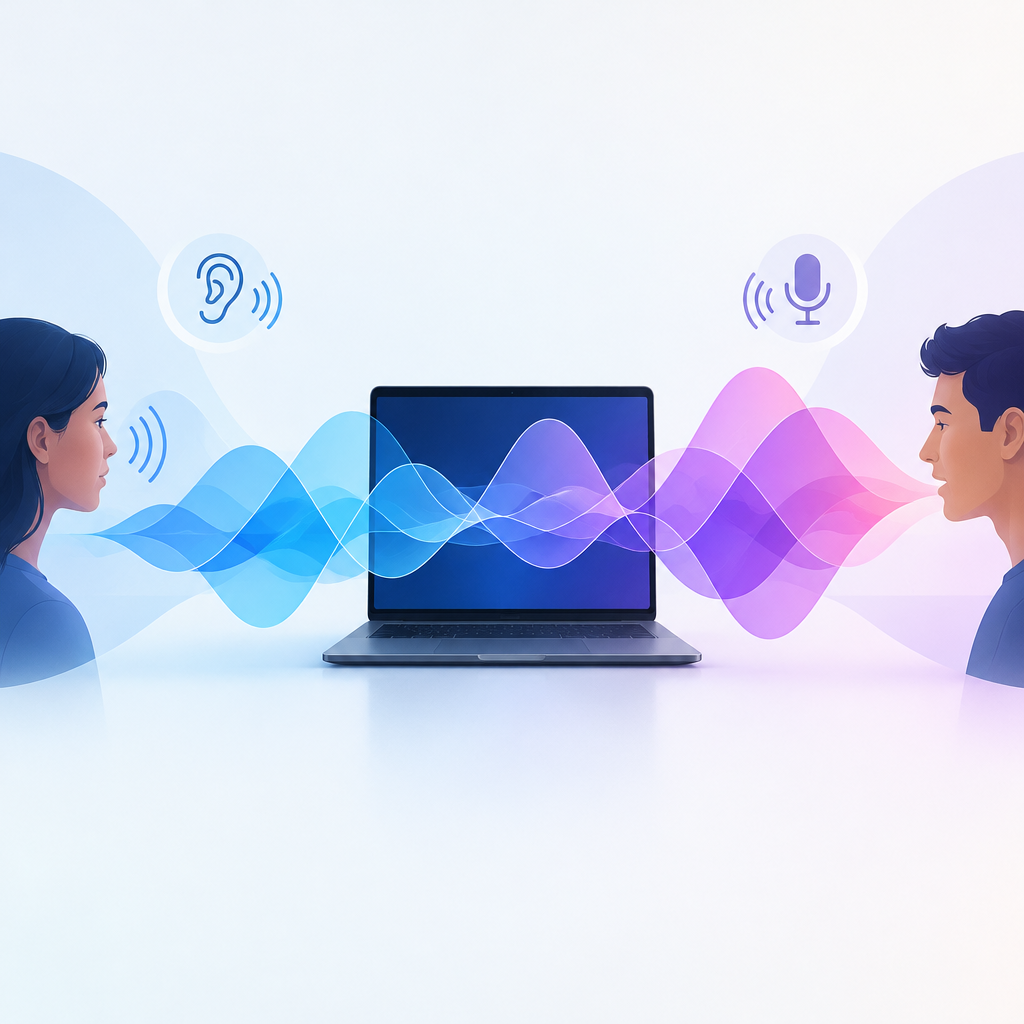
According to Block’s own page, Dessa is trained from scratch using human conversation audio, not text and not pretrained models. Block also says the system is full duplex, meaning it can listen and speak at the same time instead of waiting for one side to finish before the other begins. The company says the model is designed for natural interruptions, backchannels such as brief listening cues, and more expressive speech behavior. These are vendor claims, not our benchmark results.
Block also says inference can run faster than real time locally on a MacBook Pro M4 Max or better, and that the system was trained on one NVIDIA GB200 NVL72. Those statements matter, but they are still capability claims from the builder. They do not yet tell a buyer what the product costs, how stable it is across noisy settings, whether it is broadly available, or what level of engineering effort is needed to turn a demo into a dependable voice tool.
Why “Can Run Locally” Is Not the Same as “You Can Download It”
This is the most important distinction for readers scanning a launch page. A model can be described as locally runnable on certain hardware without being publicly downloadable. That could mean the system is being shown in a controlled environment, offered only to selected researchers, or demonstrated under access restrictions that are not fully visible in the public page.
So if you are a developer or procurement lead, do not collapse three different ideas into one: hardware feasibility, access availability, and production readiness. A local-runtime claim only suggests that, if you have the right machine and the right build, the system may be able to execute without a remote cloud dependency. It does not tell you whether the software is available to you, under what licence, or whether it is appropriate for a real customer workflow.
What Full Duplex Means in Plain English
In a typical voice assistant flow, one side speaks, then stops, then the other side replies. That is a turn-taking pattern. Full duplex aims to feel more like human conversation: the system can receive audio while also producing audio, so interruptions, acknowledgments, and overlap become part of the interaction rather than an error case.
That does not automatically make the model smarter, more reliable, or more emotionally aware. It means the interaction layer is more conversational. A full-duplex system can feel more natural when it handles backchannels, mid-sentence corrections, and interruptions well. But natural-sounding speech is not the same thing as robust reasoning, factual accuracy, or true emotional understanding.
It is also worth avoiding a common oversimplification: not every other voice AI is “just text-based.” Many voice systems already include speech input, speech output, and intermediate processing. The real differentiator here is the conversational timing model and whether the system can handle overlapping speech gracefully.
Why This Feels Like Research, Not a Finished Voice Agent Product
Dessa reads as a research preview because the public material centers on model behavior, training method, and demo clips rather than on product-level details such as supported surfaces, developer documentation, SLA language, pricing, or rollout dates. That is not a flaw; it is a sign that the system may still be in an evaluation phase.
The Verge corroborated the broader launch conversation around Block and Dessa on October 23, but the article does not substitute for independent technical validation. And the demos themselves are described by Block as live recordings with subtitles added later, which means viewers should be careful not to read them as controlled benchmark evidence. In other words, the demos show how the system can sound in curated examples; they do not prove how it performs across every environment a buyer cares about.
What the Research Context Suggests About Turn-Taking
A separate paper on full-duplex speech models, published on arXiv in September 2026, offers useful context without evaluating Dessa directly. The paper reports that addressing and silence can be strong triggers for turn-taking behavior in several model families. That matters because it highlights a common problem in conversational audio systems: deciding when to speak is often as important as deciding what to say.
The takeaway is not that one vendor has solved conversation. It is that the design of speech turn-taking is an active research problem, and systems can be sensitive to cues that are easy for humans to miss or misinterpret. For readers comparing products, that means you should ask not only whether a model can talk, but also how it decides to yield, interrupt, continue, or stay silent.
A Practical Evaluation Checklist for Buyers and Developers
If you are considering a voice assistant, an agentic receptionist, a call-center helper, or a speech interface, use a proposed evaluation checklist like this before drawing conclusions from the preview:
- Actual access: Is there a real public download, a gated beta, or only a request form?
- Licence: What rights do you get to use, modify, redistribute, or deploy the model?
- API and latency: Are there published endpoints, rate limits, and latency distributions across realistic sessions?
- Accents and noise: How does it perform with different accents, overlapping speakers, background noise, and packet loss?
- Interruption handling: Does it resume gracefully when interrupted, or does it talk over the user?
- Consent and retention: What audio is stored, for how long, and who can review it?
- Tool permissions and handoff: Can it safely call tools, and can a human take over without breaking the workflow?
- Cost per completed task: What is the total cost when you include retries, failures, and human review?
- Fallback behavior: What happens when confidence is low, audio is unclear, or the user changes topic unexpectedly?
This is only a proposed evaluation framework, not a report of measured results for Dessa. Still, it is the right lens for separating a compelling demo from a dependable product.
Expressive Speech Is Not the Same as Reliable Reasoning
One reason voice models attract so much attention is that they can sound surprisingly human. That is useful, but it can also be misleading. A system can manage interruptions, produce emotional cadence, and mimic conversational rhythm without actually understanding the situation in a human sense. And it can do so while still making errors, hallucinating, or missing context.
That is why emotional style should be treated as a user-experience feature, not as evidence of sentience or empathy. For builders, the more useful question is whether the model supports the task safely and consistently: scheduling, triage, information capture, support routing, or other bounded workflows where a human can verify the result if needed.
What We Still Do Not Know
Based on the reviewed material, several important questions remain unanswered. There is no confirmed public download path, no verified release date, no licence text, no pricing, no public API spec, and no independent benchmark set for general buyers. The page also does not provide enough information to support claims about country availability, supported languages, memory requirements, or real-world reliability.
That uncertainty matters. In AI research, the gap between “promising demo” and “operational product” is where many launch narratives become exaggerated. With Dessa, the public evidence is strong enough to show an intriguing direction in speech modeling, but not strong enough to justify calling it a broadly available downloadable voice agent.
Bottom Line
Block’s Dessa appears to be a serious speech-only research preview with full-duplex ambitions, local runtime claims, and a conversation-first training approach. But as of October 24, 2026, the reviewed public material does not confirm that readers can download it today, nor that it is a finished production voice platform. If you are evaluating it, focus on access, licence, latency, safety controls, handoff, and real-world conversation tests—not just on how polished the demo sounds.
Sources
arXiv: Full-Duplex Speech Models Take the Floor When Asked, Not When Needed
The Verge coverage of Block and Dessa