Google Universal Cart: How It Works, Where It’s Available, and Can It Succeed?
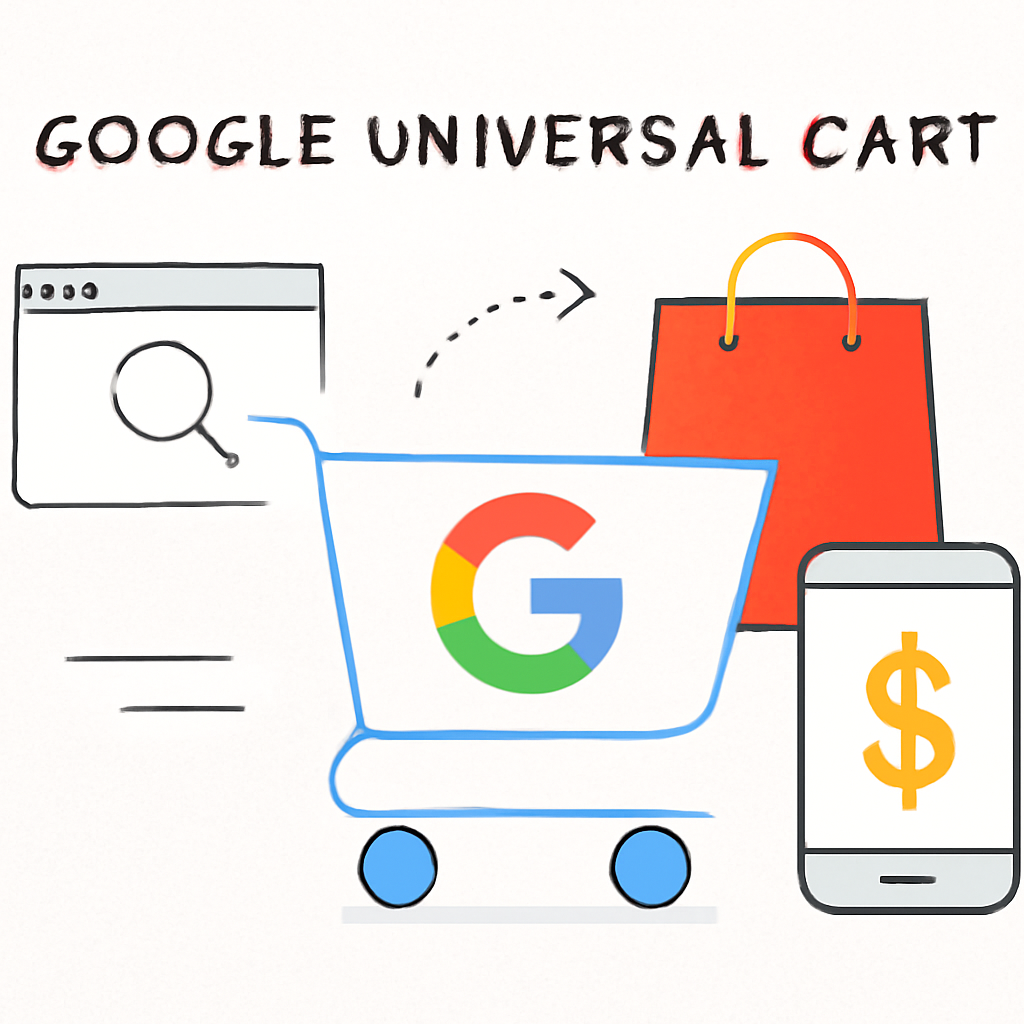
Google’s Universal Cart is Google’s attempt to make shopping feel more connected across Search and Gemini. Instead of starting over with each retailer, shoppers can save items from participating merchants into one cart experience, then use Google Pay checkout where supported or transfer to the merchant site when needed. Google says the merchant remains the seller of record and is responsible for order confirmation and support. The feature also includes price and restock alerts, along with promo code and payment-related conveniences for supported purchases. In Google’s October 15, 2026 announcement, the rollout was described for the United States.
How Universal Cart Works
In simple terms, Universal Cart is not a promise that every item becomes part of one shared order. It is a shared saved-cart layer that can collect products from different retailers in one place. That matters because the cart may reduce the effort of tracking multiple items, but it does not automatically merge the underlying business rules.
- Available in Search and Gemini in the United States, according to the announcement.
- Supports a cross-retailer saved cart for participating merchants.
- Can show price and restock alerts for saved items.
- May support promo codes and payment conveniences depending on the merchant and checkout flow.
- Uses Google Pay checkout when supported, or sends the shopper to the merchant site for completion.
- The merchant stays the seller of record and handles order confirmation and support.
Where It’s Available
Google’s cited announcement confirmed a U.S. rollout. The announcement did not confirm India or other markets, and it did not provide a broader global launch date. For readers outside the U.S., availability should be treated as unconfirmed unless Google announces it directly in a local market.
- United States: announced rollout.
- India: not confirmed in the cited announcement.
- Other markets: not confirmed in the cited announcement.
How It Compares With Amazon, in Plain English
A useful comparison is Amazon’s familiar cart experience, but only at a high level. Amazon often gives shoppers a single storefront-style flow inside one marketplace. Universal Cart, by contrast, is more like a layer that helps organize shopping across participating retailers. That means it may simplify discovery and saving, but it does not make Google the seller, warehouse, or returns desk for every item.
That distinction matters. One saved cart does not mean one seller, one parcel, one delivery fee, or one uniform return policy. Each merchant can still have its own prices, shipping terms, stock status, and support process.
Can It Succeed? The Real Success Factors
Universal Cart has a clear user appeal: fewer tabs, fewer forgotten items, and less friction when comparing or saving products. But its success will depend on execution and merchant participation, not just a clever interface.
- Merchant adoption: the cart is only useful if enough retailers participate.
- Checkout friction: shoppers will abandon the experience if the transition to payment or merchant sites feels confusing.
- Shopper trust: users need to understand who is selling, who is shipping, and who handles support.
- Price accuracy: alerts are helpful only if prices and availability remain current.
- Delivery and returns clarity: shoppers must be able to verify shipping costs, delivery timing, and return rules before buying.
Why Small Businesses May Care
For smaller merchants, a cross-retailer cart can be an opportunity if it helps their products appear in more shopping moments. It may create another path to discovery, especially when shoppers are comparing several items at once. But the upside is not automatic. Sellers would still need to assess whether the added visibility is worth the operational complexity of supporting another checkout path and keeping product data accurate.
Eligibility is not fully clear from the cited announcement, so merchants should not assume they can join every feature or payment flow. Any business considering participation should verify current requirements directly with Google.
What Shoppers Should Verify Before Buying
Because Universal Cart aggregates items across merchants, the safest approach is to check the basics before you pay. This is not about testing the product’s behavior; it is about confirming the purchase terms that still belong to each retailer.
- Who the seller of record is for each item.
- Whether all items are shipping from the same merchant or from different merchants.
- The final delivery fee for each order or item.
- Expected delivery dates and whether they differ by seller.
- Return windows, return shipping costs, and refund timing.
- Whether promo codes were applied correctly before checkout is completed.
- Which payment method is actually being charged.
Bottom Line
Google Universal Cart is best understood as a convenience layer for shopping across participating retailers, not a replacement for the merchants themselves. Its main promise is reduced friction: save items once, keep track of them across Search and Gemini, and check out where supported. Whether it becomes widely useful will depend on how many retailers support it, how clearly Google and merchants communicate the checkout details, and whether shoppers feel confident that the saved-cart convenience does not blur the real rules of buying, shipping, and returns.
FAQs
Q: Is Google Universal Cart the same as buying from Google? A: No. Google says the merchant remains the seller of record, so the retailer still handles the order relationship.
Q: Can I use Universal Cart outside the United States? A: The cited announcement confirmed a U.S. rollout. Other markets were not confirmed in that announcement.
Q: Does one Universal Cart mean one shipment? A: Not necessarily. Different sellers may still fulfill items separately.
Q: Does Universal Cart guarantee the same return policy for all items? A: No. Return policies can still vary by merchant.
Q: What is the main benefit for shoppers? A: A simpler way to save, track, and revisit items across Google shopping surfaces without starting from scratch each time.
SEO Metadata
- SEO title: Google Universal Cart Explained: How It Works, Availability, and Success Factors
- Meta description: Learn how Google Universal Cart works, where it is available, and what will determine its success. Includes a plain-English comparison with Amazon and a shopper checklist.
- Primary keyword: Google Universal Cart
- Secondary keywords: Universal Cart Google, Google shopping cart, Search and Gemini shopping, Google Pay checkout, merchant seller of record