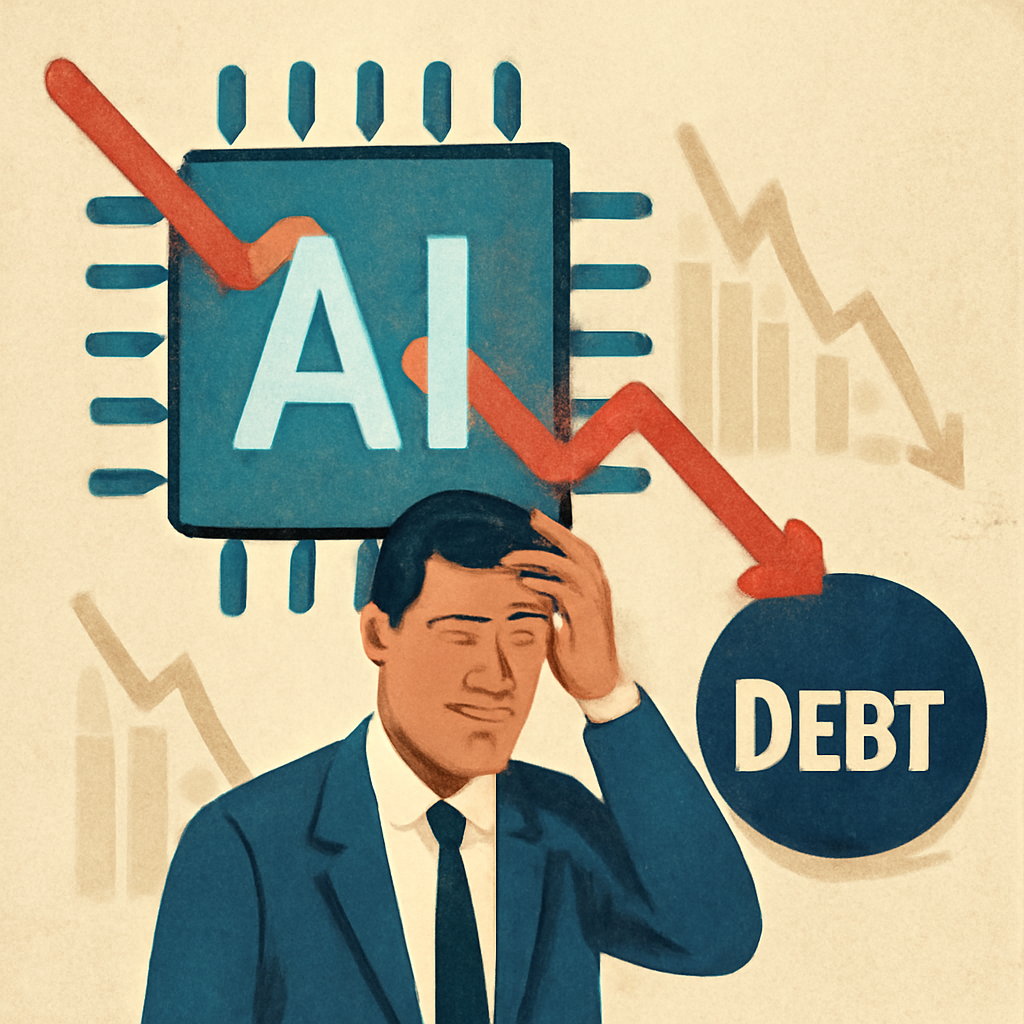
Why Are AI Stocks Falling? The Debt Concern Explained (October 15, 2026, premarket)
In premarket trading on October 15, 2026, U.S. stock futures were weaker, with Reuters reporting that Nasdaq futures were down more than 1% as worries about AI-related debt and higher interest rates hit sentiment. That is an early trading signal, not a closing result, so it shows how investors were reacting before the U.S. market opened rather than where stocks ultimately finished the day.
The short answer to the headline question is this: many AI companies and AI-linked businesses are spending heavily on chips, servers, power, and data centers, and some of that spending is being funded with borrowed money. When rates are high and debt piles up, investors worry about how easily those firms can pay interest, refinance loans, and turn fast growth into durable cash flow.
What the market news is saying
Reuters reported today that the AI trade was under pressure as debt concerns spread. Business Insider also pointed to market anxiety around AI infrastructure financing, including the strain that borrowing and bond yields can create for companies building out data centers and GPU capacity. Those reports help explain the mood, but the exact impact can differ from company to company.
What is the debt concern, in plain English?
Here, debt means corporate borrowing — not your personal loans, mortgages, or credit cards. A company may borrow to buy GPUs, build data centers, secure energy supply, or expand network capacity. Borrowing can accelerate growth, but it also creates fixed obligations: interest payments, principal repayment, and refinancing risk if credit markets tighten.
That matters more when interest rates are higher. If a company borrows at a higher cost, each dollar of debt is more expensive. Investors then ask whether the business can generate enough operating cash flow to cover those costs while still funding more growth. If the answer is unclear, the stock can come under pressure even if demand for AI services remains strong.
Why AI infrastructure is so expensive
Building AI capacity is not just about software. It often requires powerful chips, large clusters of servers, cooling systems, specialized buildings, and substantial electricity access. These are capital-intensive projects, so companies may need either equity financing, debt financing, or a mix of both.
Equity financing means selling shares and giving up some ownership. Debt financing means borrowing money and promising to repay it. Neither option is free. Equity can dilute existing shareholders. Debt can stress cash flow if revenue arrives more slowly than expected. That trade-off is at the center of the current concern.
Why debt worries do not affect every AI stock the same way
It is important not to treat “AI stocks” as one single group. Some companies sell chips or cloud infrastructure. Others use AI inside a much broader business. Some have stronger balance sheets and higher cash reserves. Others are earlier in their growth cycle and more dependent on outside financing. A stock can fall because investors fear one company’s funding model, not because the whole AI industry is broken.
A drop in a stock price also does not prove that AI demand is disappearing. It may simply mean the market is repricing risk, especially if borrowing costs rise or if investors think spending will outrun near-term earnings.
How this could matter for ordinary readers
Even if you do not own individual AI shares, the story can still matter indirectly. Many people hold broad index funds, retirement accounts, or diversified portfolios that may include major technology and infrastructure names. Also, AI capital spending can influence suppliers, utilities, cloud providers, and even sectors tied to electricity and construction. But the effect is uneven, and a single premarket move should not be confused with a long-term verdict.
What to watch next
- Whether more AI companies disclose fresh borrowing, bond sales, or spending plans.
- Whether financing costs rise further if bond yields stay elevated.
- Whether management teams show that AI-related investments are producing enough revenue or cash flow.
- Whether premarket weakness holds after the U.S. opening bell or fades during the session.
Search questions, answered briefly
- Why are AI stocks falling today? Market concerns about debt, higher rates, and heavy AI spending are weighing on sentiment in premarket trading.
- Is debt the same as personal debt? No. This article is about corporate borrowing by companies, not readers’ personal loans.
- Does a falling AI stock mean AI is failing? Not necessarily. It may reflect financing risk, valuation pressure, or slower cash-flow expectations.
- Is premarket trading the final price? No. Premarket moves are early indications and can change after the market opens.
Sources
Reuters: Nasdaq futures dive over 1% as AI rout deepens on debt concerns
Business Insider: CoreWeave, bond yields, and distressed debt concerns around AI infrastructure