Ruby Tuesday’s Toast Rollout: Test One Order From Table to Kitchen
On November 5, 2026, Toast announced an agreement to implement its enterprise restaurant technology across Ruby Tuesday locations. The planned equipment includes Toast Go 3 handhelds, Flex 3 terminals and kitchen displays. For another restaurant planning a rollout, a useful first check is whether one mock order reaches the right kitchen station with every detail intact.
Toast announcement: Ruby Tuesday selects Toast
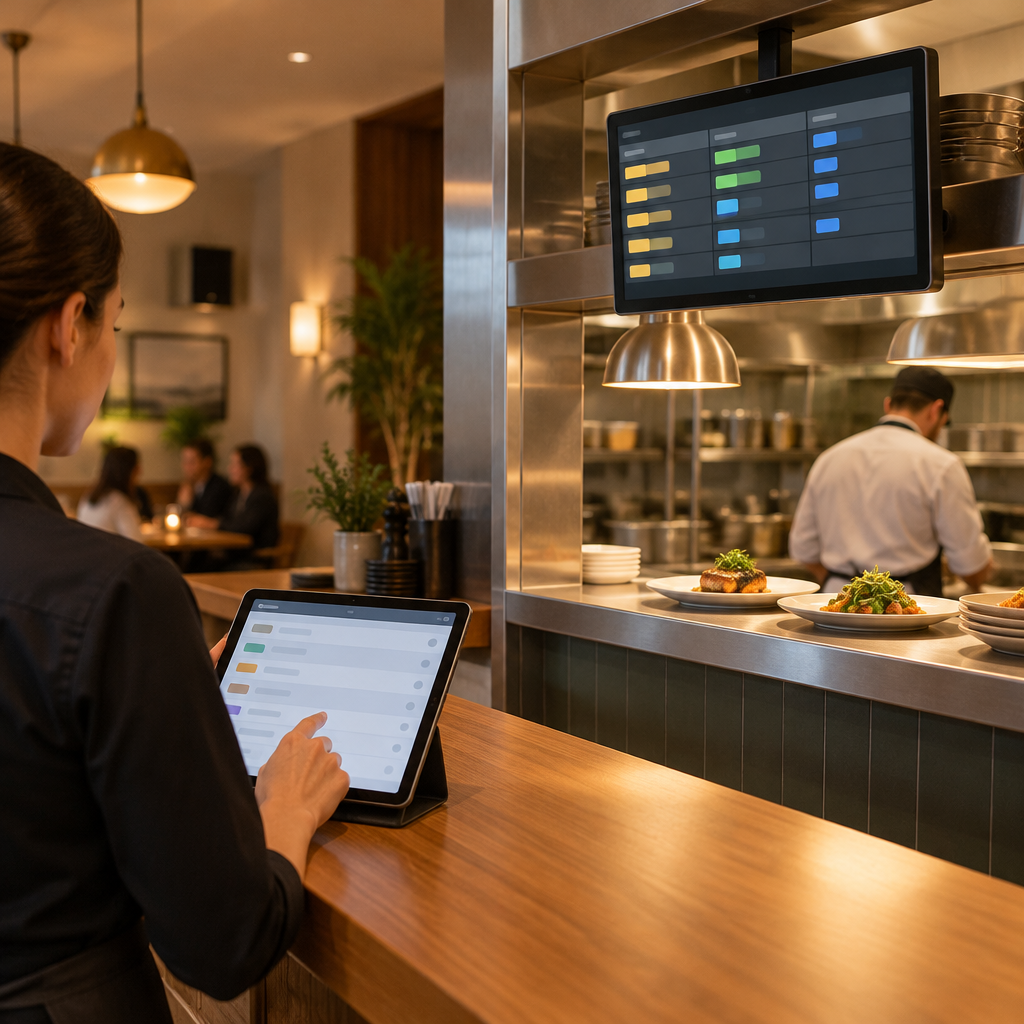
A practical mock test should stay non-production and limited to one location. Use a fictional menu item, such as a “grilled chicken bowl,” and add one modifier, such as “no onions.” Then enter the order on a staff handheld, record the order ID and time, and confirm that the table number appears correctly. Next, verify that the same item and modifier reach the correct kitchen station display. The goal is simple: confirm the same order details appear consistently at the table, on the handheld, and in the kitchen queue.
- Use one table and one fictional item only.
- Record order ID, timestamp, table number, item name, and modifier.
- Confirm the order appears on the intended handheld and the correct kitchen station.
- In the test environment, correct the modifier once using the normal workflow. Check that the kitchen can identify the correction and that it does not leave a second active order.
- If any field is wrong or delayed, hold the rollout at that location and log the mismatch before expanding the test.
That kind of test keeps the focus on process, not performance claims. It does not assume Ruby Tuesday’s own deployment has already been validated, and it does not prove anything about sales, speed, or guest satisfaction. It simply gives operators a disciplined way to check whether order routing, modifiers, and kitchen handoff behave as expected in one store before any broader change.
Offline Mode: what Toast says, and what it does not
Toast also says guests cannot place new Mobile Order & Pay orders while the system is in Offline Mode. In that same condition, staff can still enter orders, and backup printers may continue to work if the local network remains connected and the setup supports it. That distinction matters: Offline Mode is not the same as a fully open guest ordering channel, and it is not a promise that every device or workflow will behave the same way in every restaurant.
Toast support: Order & Pay During Offline Mode
For operators, the safest takeaway is to test the planned hardware path in a controlled environment, document any mismatch, and avoid treating a vendor announcement as a live operational result. A measured pilot, careful logging, and a clear hold point for errors will tell you more than any product headline can.