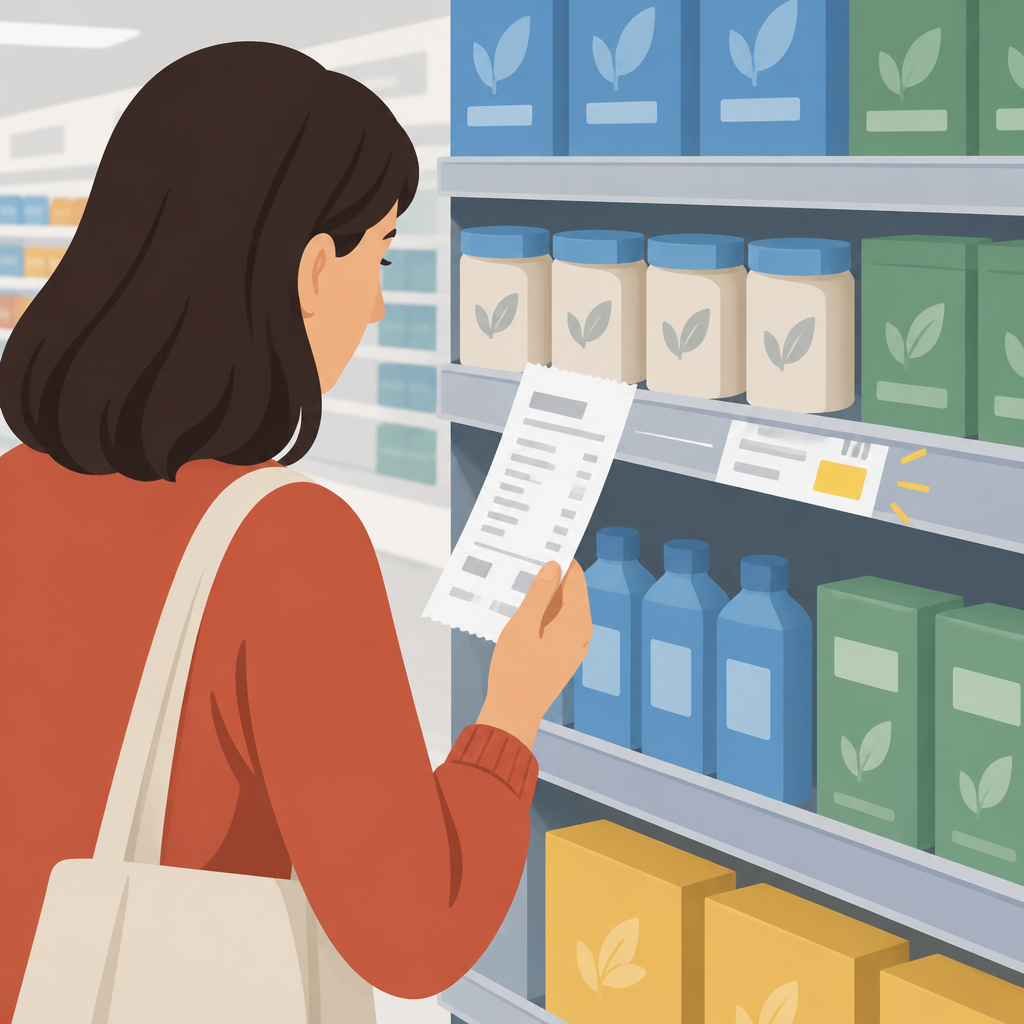
A pending case and a practical shopping record
The FTC and 20 states sued Dollar General on October 26, 2026, alleging that checkout prices repeatedly exceeded shelf and advertised prices. The allegations remain for the court to decide. Shoppers can keep a clear record of their own transactions while the case proceeds, without assuming a mismatch or its cause in advance.
What to record at the store
Treat this as an organization habit, not a legal requirement and not an official FTC procedure. For each purchase, note the exact product name, package size, quantity, and whether the item was a single unit, a multipack, or part of a bundle. Save the shelf price, any sale or promotion dates and conditions, and any membership, coupon, or app requirements that were shown. At checkout, keep the receipt, the line-item total, and any correction or adjustment reference if staff explains the difference.
If it is safe and allowed where you shop, photograph the shelf label before you move the item. Avoid capturing other customers or private information. A clear photo of the label and the nearby product can help later if you need to compare packaging, quantity, or promotion conditions.
A simple evidence card
- Store and date
- Item name and barcode or product code
- Displayed shelf or promo price and conditions
- Receipt price and quantity charged
- Any explanation, correction, or refund reference
Keep the original receipt with the note or photo record. If you received a correction, refund, or saved discount, store that too so a later review does not mistake a resolved difference for a still-open discrepancy. The goal is to preserve context, not to argue a case on the spot.
How to compare prices carefully
Compare the exact product and quantity first. A shelf tag for one unit should not be compared with a receipt line for a multipack, and a promotional price may depend on a membership card, digital coupon, or a specific date. When you compare prices, use pre-tax figures if possible and separate normal price differences from valid discounts or refunds. That helps avoid mislabeling a legitimate adjustment as a mismatch.
Hypothetical example: a shelf label shows $2.50 and the receipt charges $2.80 for each of two identical items. The pre-tax difference is ($2.80 - $2.50) × 2 = $0.60 before accounting for any valid discounts or refunds. This is a difference to reconcile; the arithmetic establishes neither a legal violation nor a compensation entitlement.
Pending case context
The FTC case record lists the matter as pending in the Middle District of Tennessee as of October 26, 2026. Because the case is still pending, shoppers should avoid drawing conclusions from the filing alone. If you need to report a concern, use official contact channels and keep your own records. Do not rely on social media screenshots or secondhand summaries when you are trying to document what happened in your own transaction.
Source links
FTC case record: Dollar General shelf pricing case page
Check your price comparison