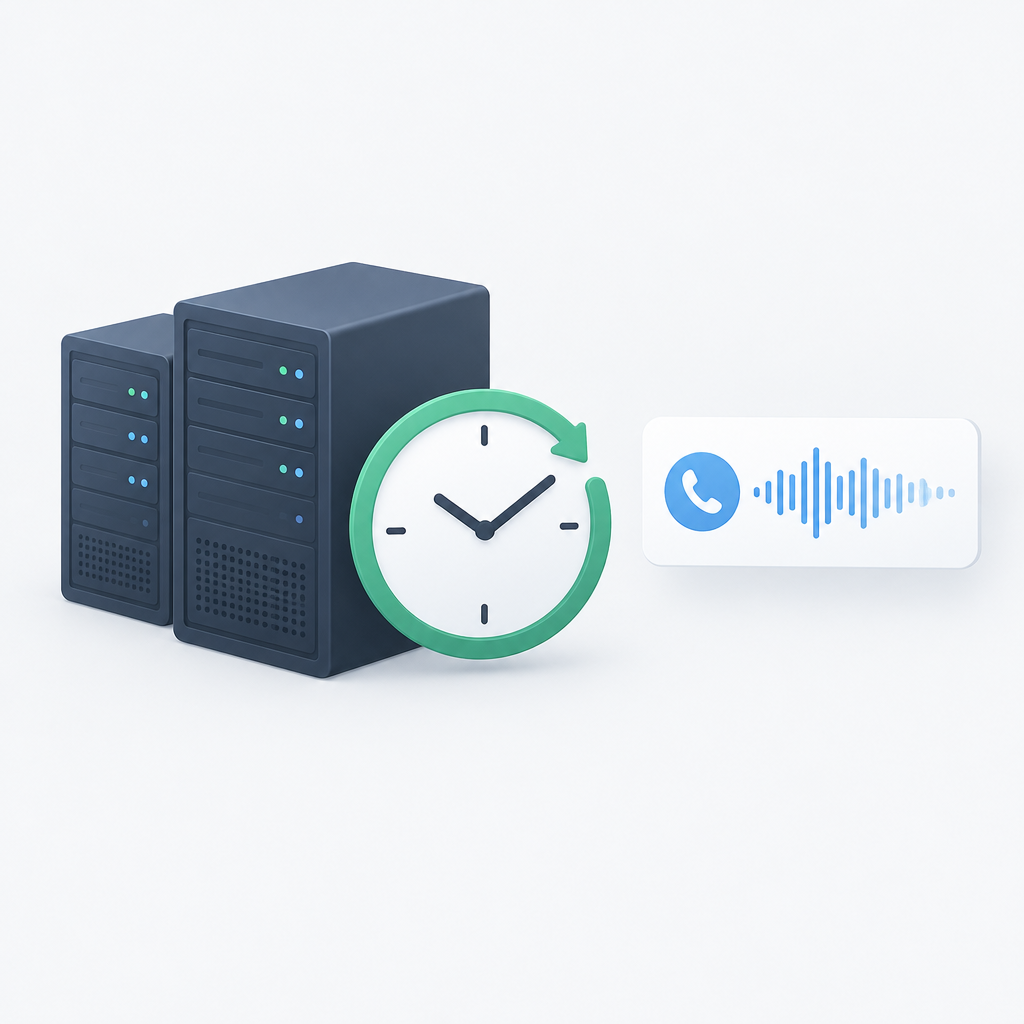
Deepgram announced on October 29, 2026 that it is acquiring Daily, the company behind Pipecat. Daily says its current products and services will continue to be sold, supported and developed. For a team reviewing its voice-agent stack, that announcement is a reason to check the actual service and billing units it uses.
Primary source: Daily’s October 29 announcement
Deepgram says the Pipecat framework will remain open source and vendor neutral. That commitment concerns the framework; it does not establish that hosted infrastructure or external model usage is free.
Primary source: Deepgram’s framework and acquisition announcement
Separate active time from reserved capacity
Pipecat Cloud’s pricing page, checked October 31, lists active and reserved rates for agent profiles. For agent-1x, it shows $0.01 per active minute and $0.0005 per reserved minute. Its footnote says reserved agents are always on, billing runs per reserved minute, and stops only when the reserved agent is turned off.
Primary source: current hosting rates, reserved-agent footnote and external-service billing
A quiet period with no customer call therefore should not automatically be recorded as zero reserved-agent time. Track how long the reserved agent remains on, separately from the duration of customer sessions. This is a reading of the stated billing unit, not a measurement of a particular account.
A fictional reserved-capacity worksheet
Assume two agent-1x reserved agents each remain on continuously for an invented 30-day planning month. Each contributes 30 × 24 × 60 = 43,200 reserved minutes. Together they contribute 86,400. At the displayed $0.0005 reserved-minute rate, that row is 86,400 × $0.0005 = $43.20.
This is a reserved-capacity row only, not a complete monthly bill. It assumes uninterrupted reservation for the stated period and uses the displayed rate without modelling account-specific agreements, taxes or credits. It does not estimate active usage, model inference, transport, telephony or recording.
Keep the rest of the bill visible
The pricing page separately describes hosting, transport, services and other charges. Its bring-your-own-provider option bills model services to the provider, and its calculator distinguishes external LLM, speech-to-text and text-to-speech services from Pipecat Cloud charges. Check the configuration you actually plan to use.
For an internal budget, record each line’s unit, rate source, quantity assumption and billing destination. Leave unknown quantities unresolved rather than treating them as included. Ask which resources remain on between sessions and who can confirm when they are turned off.
After an authorized trial, reconcile recorded resource time and usage with the provider’s billing evidence. Preserve the configuration and dated rate reference so a colleague can reproduce the estimate. No agent was deployed and no paid usage or invoice was inspected for this guide; the arithmetic is a fictional planning exercise.
Which Minutes Are You Counting?